

Understanding the Hierarchy: Why Repair Almost Always Comes First
Asphalt pavement deteriorates through a well-understood progression. Surface cracks appear first, allowing water penetration. Freeze-thaw cycles widen those cracks and begin to compromise the base layers. Eventually, the sub-base — the compacted aggregate layer beneath the asphalt — loses its structural integrity, and the surface above it begins to fail in ways that can’t be fixed by surface treatment alone.
The practical implication of this progression is straightforward: the earlier you intervene, the less it costs. Every stage of deterioration has a corresponding intervention that’s significantly less expensive than the next stage down the ladder.
The cost hierarchy from least to most expensive:
- Crack filling — addresses surface cracks before water penetration begins; the most cost-effective intervention available
- Infrared patching — restores failed or deteriorated surface areas without removing and replacing the full section
- Mill and overlay (resurfacing) — removes the worn top layer and applies fresh asphalt, extending life significantly when the sub-base is still sound
- Full-depth reclamation — corrects and improves pavement slope to promote better drainage. This process grinds and re-stabilizes the entire pavement structure before a new asphalt overlay is applied. It is an effective solution when the existing base has partially failed.
- Full repaving — complete removal and replacement of all layers; necessary only when the sub-base has failed beyond recovery
Most commercial parking lots that are described as “needing to be repaved” are actually candidates for one of the intermediate interventions on that list. The key question is always: is the sub-base structurally sound? Learn more about Addaline’s asphalt repair services.
Signs Your Parking Lot Can Be Repaired
If your lot shows any of the following conditions, targeted repair — rather than replacement — is almost certainly the right approach:
Surface Cracking Without Sub-Base Failure
Linear cracks, map cracking, or edge cracking that hasn’t resulted in significant pavement movement or depression indicates that the sub-base is still intact. These cracks are an entry point for water, and they need to be addressed urgently — but addressing them with hot rubber crack fill is a fraction of the cost of any more invasive intervention. Hot rubber crack fill is flexible enough to accommodate freeze-thaw movement, which is critical in Ontario’s climate.
Localized Surface Failures
Potholes, alligator cracking (interconnected surface cracking that resembles crocodile skin), or sunken areas that are concentrated in specific zones — rather than distributed across the entire lot — strongly suggest localized failure rather than systemic sub-base compromise. These areas can typically be addressed with infrared patching or targeted full-depth patch repair without touching the rest of the lot.
The critical distinction here is whether the failures are localized or widespread. A few concentrated problem zones in an otherwise sound lot is a repair scenario. Widespread surface failure across 50% or more of the lot raises the question of whether full replacement is more economical.
Good Drainage with Isolated Problem Areas
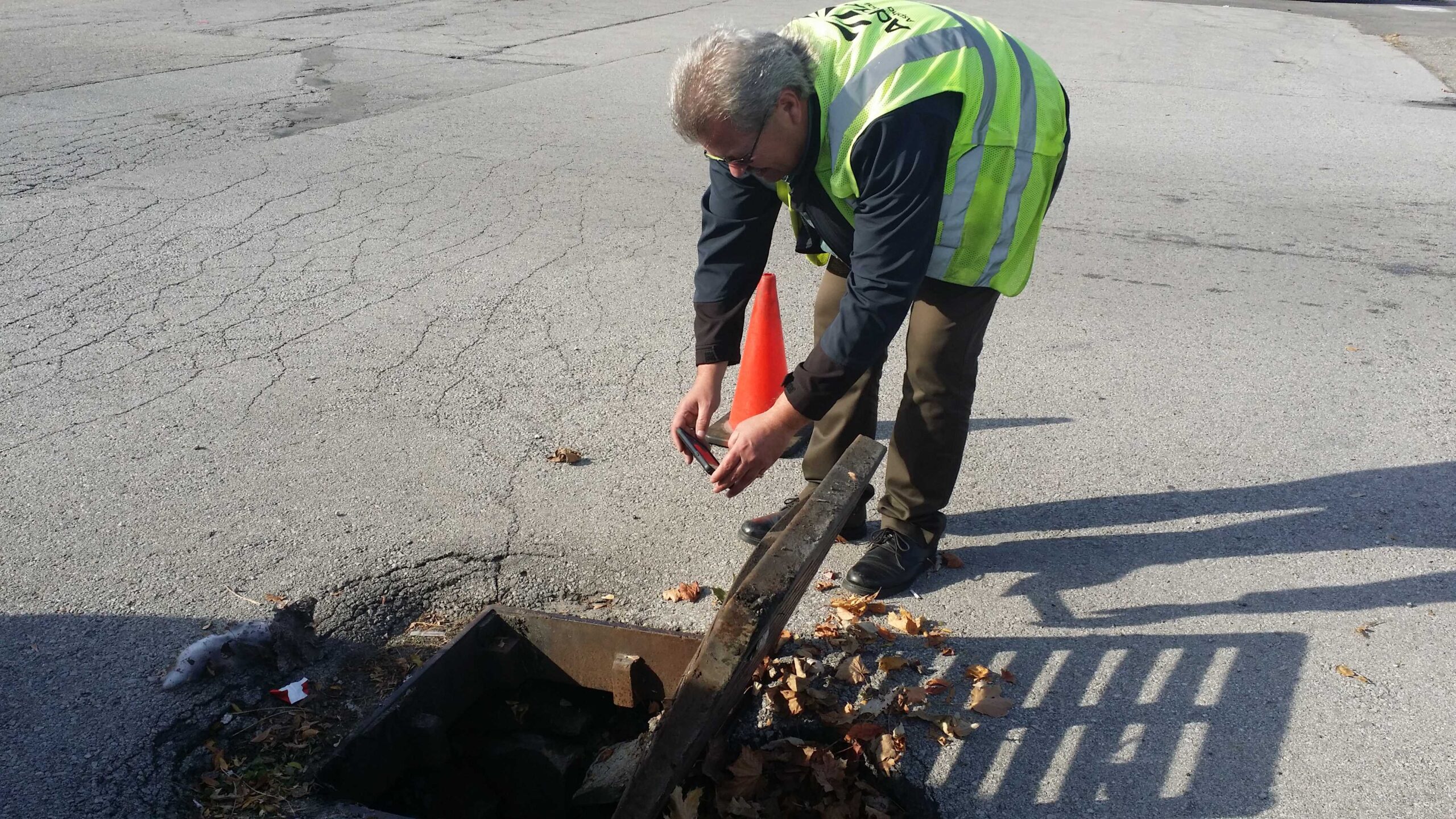
A lot that drains well overall but has isolated areas of pooling water typically has localized drainage issues — catch basins that need attention, surface depressions, or low points created by differential settlement — rather than systemic failure. Addressing the drainage infrastructure and patching the affected surface areas is almost always more economical than full replacement. See our catch basin restoration and replacement service for drainage solutions.
Lot Age Under 20 Years With No History of Maintenance
This is one of the most common situations Addaline encounters: a parking lot that is 12–18 years old, has received little or no proactive maintenance, and appears visually deteriorated. Property managers often assume that visible deterioration at this age means replacement is imminent. In reality, a lot of this age with no maintenance history is usually an excellent candidate for a comprehensive repair program — crack filling, infrared patching, and catch basin work — that can add 8–12 years of service life. According to the Asphalt Pavement Alliance, a well-constructed and proactively maintained commercial pavement can last 25–30 years. A lot that has received no maintenance at 15 years has likely consumed 10 of those years through neglect, not through inherent structural failure.
Signs Your Parking Lot May Need Replacement
Full replacement becomes the right answer when repair costs approach or exceed replacement costs, or when the structural integrity of the pavement system has failed beyond what surface intervention can address:
Sub-Base Failure
The definitive indicator that replacement is needed is sub-base failure — when the compacted aggregate base beneath the asphalt has lost its structural integrity and can no longer support the pavement above it. Signs of sub-base failure include: significant pavement deflection under load (the surface moves or flexes under vehicle weight), widespread alligator cracking across large areas of the lot, and pavement that continues to fail immediately after being patched.
Sub-base failure can result from chronic water infiltration over many years, inadequate original construction, or ground movement beneath the lot. When the sub-base has failed, adding new asphalt on top of it is not a long-term solution — the new surface will fail in the same locations within a season or two.
More Than 50–60% of the Surface Requires Replacement
There is a crossover point at which the cumulative cost of patching individual areas exceeds the cost of resurfacing or repaving the entire lot. When a thorough condition assessment reveals that more than half of the lot’s surface has failed or is failing, full resurfacing or replacement becomes the more economical option — both immediately and over the medium term.
This doesn’t mean that every cracked lot needs to be repaved. It means that when the scale of surface failure is genuinely widespread, the math changes. An honest condition assessment is the only way to know where your lot falls.
Repeated Failures in the Same Locations After Repair
If a section of your parking lot has been patched multiple times and continues to fail in the same location, this is a strong signal that the cause is not a surface issue but a sub-base or drainage issue that surface patching cannot resolve. At this point, a deeper intervention — full depth patch, sub-base stabilization, or replacement of the affected section — is warranted.
This is distinct from a lot where repairs hold well but new areas of cracking continue to appear. The latter is normal surface aging and is addressable with proactive maintenance. Repeated failure in the same spot after repair indicates an underlying structural issue.
Lot Age Over 25–30 Years with Major Surface Failure
A parking lot that has reached the end of its design life — typically 25–30 years for a well-constructed commercial lot in Ontario — and is showing widespread surface failure is likely a replacement candidate. That said, “25–30 years old” is not by itself a reason to repave. Age combined with widespread surface failure and sub-base compromise is the trigger, not age alone. We have assessed lots that are 30+ years old and determined that targeted maintenance would extend their service life by another decade. Every lot is different. See our article on parking lot maintenance and Ontario liability for the legal context around deferred maintenance decisions.
How to Make the Decision: The Condition Assessment
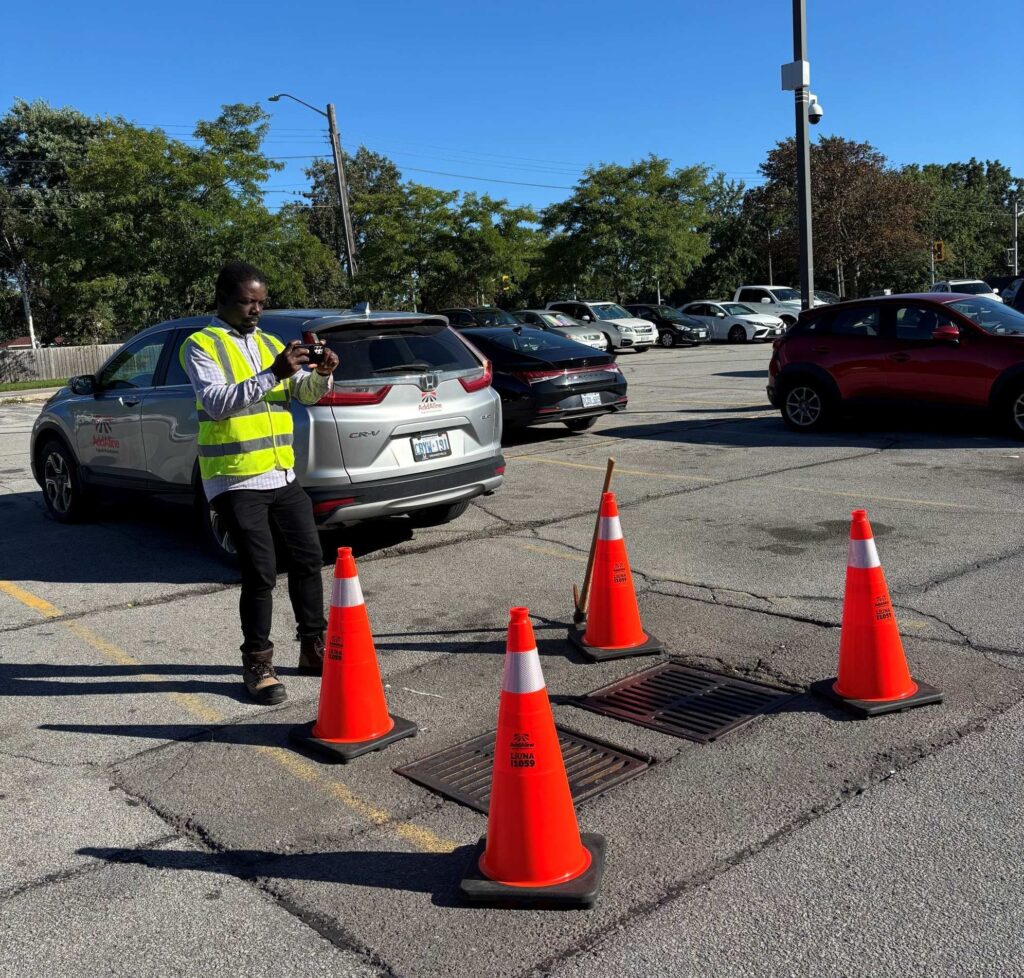
The most reliable path to the right repair-vs-replace decision is a professional condition assessment — a systematic evaluation of the lot’s pavement, sub-base, drainage, and deterioration patterns conducted by someone with the expertise and the equipment to distinguish surface issues from structural ones.
A thorough condition assessment should evaluate:
- Crack density and pattern — surface cracking vs. structural cracking vs. reflective cracking from failed sub-base
- Pavement deflection — does the surface move under load, indicating sub-base weakness?
- Drainage performance — is water moving off the lot or pooling? Where are the catch basins and are they functioning?
- Localization of failure — are problems concentrated in identifiable zones or distributed across the entire lot?
- Patch history — which areas have been repaired before, and are those repairs holding?
- Subgrade conditions — what is beneath the asphalt, and has freeze-thaw or drainage compromised it?
Based on this assessment, a knowledgeable contractor can give you a clear picture of what’s actually happening with your pavement — and an honest recommendation about whether repair or replacement is the right approach.
One important note: be cautious of assessments from contractors who are primarily paving companies with a financial incentive to recommend full replacement. A contractor whose core business is maintenance and repair — like Addaline — has the opposite financial incentive: we make our business by extending pavement life, not by selling new pavement.
The Financial Case for Repair Over Replacement
The numbers consistently favour proactive repair over reactive replacement for property managers who are thinking beyond the next budget cycle.
Consider a simple illustration: a commercial parking lot that receives annual crack filling and targeted patching at a cost of $5,000–$15,000 per year can extend its useful life by 8–12 years compared to a lot that receives no maintenance. At an average repaving cost of $150,000–$400,000 or more for a medium-sized commercial lot in Ontario, deferring repaving by a decade through maintenance represents an enormous capital savings — and the maintenance costs over that period are a fraction of the avoided repaving cost.
The property managers who get this right are the ones who treat asphalt maintenance as a capital planning discipline rather than a reactive expense. They conduct annual inspections, budget for predictable maintenance costs, and address deterioration at the crack-filling stage rather than waiting for it to reach the patching or repaving stage. Our article on how regular asphalt maintenance saves businesses thousands covers this in more detail.
Under the Ontario Occupiers’ Liability Act, property owners and managers also have a legal duty to maintain premises in a reasonably safe condition. Deferred maintenance that results in a slip-and-fall or vehicle damage claim creates liability exposure that can dwarf the cost of the maintenance that would have prevented it.
Why Ontario Property Managers Trust Addaline for This Decision
Addaline Asphalt Maintenance is not a paving company. We are a maintenance and repair specialist — which means our entire business model is built around extending the life of existing pavement, not selling new pavement. When Addaline assesses your lot and tells you it needs repair rather than replacement, that recommendation comes from a company that makes its business by doing exactly that. And when we tell you that a lot genuinely needs to be replaced, you can trust that assessment too — because we have no financial incentive to give you that answer.
Advanced Infrared Technology
Addaline’s infrared repair process heats existing asphalt to its working temperature, allows it to be reworked and blended with fresh material, and produces a seamless repair that is structurally integrated with the surrounding pavement. The result is a repair that is traffic-ready in as little as 45 minutes and significantly more durable than cold-patch alternatives. Learn more at our asphalt repairs and maintenance page.
Industry-Leading Two-Year Warranty
Every repair Addaline completes is backed by a two-year warranty — one of the strongest in the Ontario asphalt maintenance industry. We stand behind our work because we do it right the first time: right materials, right process, right equipment.
Proactive, Not Reactive
Addaline works with property managers to develop multi-year maintenance plans that are tied to the actual condition of their lots. This means predictable costs, fewer emergency repairs, and pavement that lasts longer. Learn more about why property managers choose Addaline.
Honest Assessments, Accurate Recommendations
Our clients — many of whom have worked with Addaline for 10, 15, and 20+ years — will tell you that what keeps them coming back is straightforward: we give honest assessments and accurate recommendations. We don’t sell unnecessary work, and we don’t underestimate what needs to be done.
Serving Ontario Property Managers Across the Province
Addaline serves commercial properties across Ontario including London, Toronto, Hamilton, Kitchener-Waterloo, Cambridge, Burlington, Mississauga, Brampton, Vaughan, Barrie, Guelph, Brantford, Oshawa, Whitby, Windsor, and beyond. Wherever your properties are located, our team has the experience and the equipment to assess them accurately and maintain them properly.
Get an Honest Assessment — Before You Commit to Either Decision
The most expensive parking lot decision you can make is the wrong one — whether that’s an unnecessary repave or a repair that can’t actually solve the underlying problem.
Addaline offers condition assessments for commercial properties across Ontario. We’ll walk your lot, identify what’s actually happening with your pavement, and give you a clear, honest recommendation — with a detailed quote for whatever the right course of action turns out to be.
Contact Addaline today to request a quote or call us at 1-888-355-5750. We serve commercial properties across Ontario, and we’d be glad to help you make the right call for your properties.

Robin Farley is the VP of Marketing and Sales at Addaline Asphalt Maintenance, where she has been helping educate commercial property owners and facility managers since 2012. With a background in journalism, communications, and fundraising, Robin specializes in simplifying complex parking lot maintenance topics into practical, informative resources. She developed Addaline’s Asphalt 101 educational program and regularly writes about asphalt repairs, pavement maintenance, and long-term asset management for commercial properties.
