

Quick Answer: What Does Parking Lot Asphalt Maintenance Cost in Ontario?
Most commercial properties don’t need a full repaving job — they need targeted repairs. Here’s a general order of our services from least to most involved:
- Hot rubber crack filling — generally the most affordable service
- Parking lot line painting
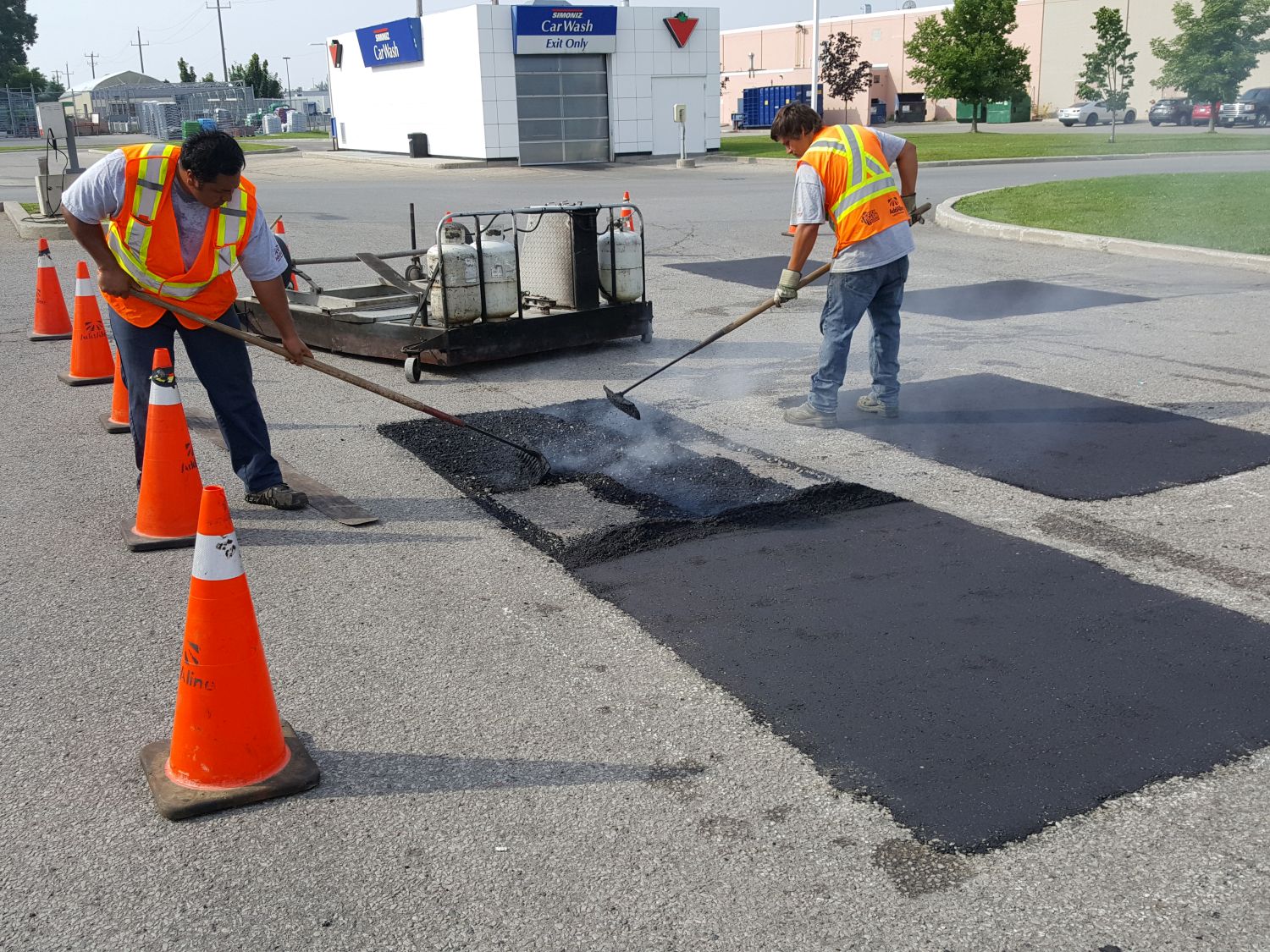
- Asphalt patching (infrared or saw cut and replace)
- Catch basin restoration or replacement (cost varies significantly depending on extent of damage)
- Bollard & sign installation
- Concrete repairs (curbs, sidewalks, islands)
The key insight most property managers miss: spot repairs and preventative maintenance almost always cost a fraction of full repaving — and done properly, they can extend your lot’s life by a decade or more.
Understanding What Kind of Help Your Parking Lot Actually Needs
Here’s something worth saying plainly, because a lot of property managers don’t hear it often enough: most parking lots don’t need to be repaved. They need to be repaired.
There’s a big difference between those two things — in cost, disruption, and timeline.
Think of it this way. When your car needs new brake pads, you don’t scrap the car and buy a new one. You fix the brakes. A parking lot is similar. Full repaving is a major capital project — the equivalent of buying a new car. It’s expensive, disruptive to your tenants and customers, and usually not necessary if regular maintenance has been part of your property management routine.
Addaline’s role is closer to a skilled tailor than a clothing manufacturer. A tailor hems pants, repairs seams, and extends the life of garments you already own. A manufacturer builds from scratch. Addaline isn’t the right call if you need a new parking lot built from the ground up — large paving contractors handle that, and at scale, they can do it more cheaply. But that’s not who most property managers need when they have potholes, cracking, drainage issues, or fading line markings. Those problems need a specialist, not a replacement.
When you call Addaline, you’re paying for targeted, expert repairs that address real problems — not a cosmetic covering that hides them temporarily. That distinction matters enormously, as we’ll explain below.
A Word About Sealcoating (And Why We Don’t Do It)
You may have seen sealcoating offered as a parking lot maintenance solution. We want to be straightforward about this: Addaline does not offer sealcoating, and we don’t recommend it as a maintenance strategy.
Sealcoating is a superficial coating applied over the surface of existing pavement. It looks good for about a season. The problem is that it doesn’t address the actual issues — cracks, sub-base failures, drainage problems — that are causing your pavement to deteriorate. It’s a cosmetic cover-up applied over problems that are still actively getting worse underneath.
Within roughly two years, sealcoating typically begins to peel, chip, and create additional surface maintenance problems. Property managers who use sealcoating as their primary maintenance strategy often find themselves re-applying it repeatedly while the real problems underneath compound. It’s an approach that appeals because it’s inexpensive upfront — but it doesn’t solve anything, and it can actually obscure damage that needs genuine attention.
The services Addaline provides — hot rubber crack filling, infrared asphalt repairs, catch basin restoration, and concrete work — address root causes, not appearances. That’s a different category of work entirely.
Why Parking Lot Maintenance Costs Vary So Much
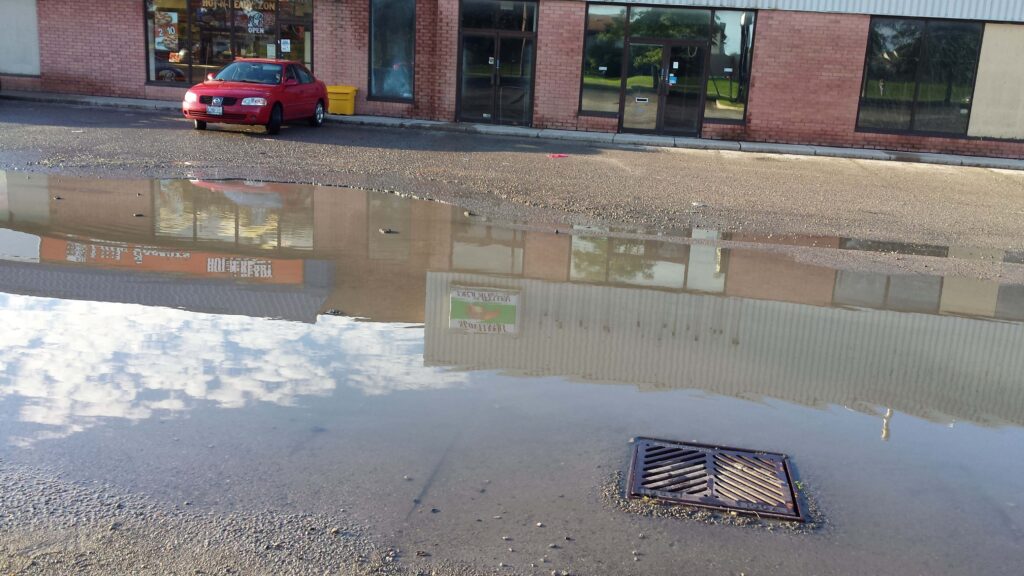
Before we get into specific numbers, it’s worth understanding why quotes can differ dramatically from one property to another. Asphalt maintenance isn’t a one-size-fits-all service. Two parking lots that look similar on the surface might need completely different treatment underneath.
Here are the main factors that influence what you’ll pay:
What’s actually wrong. This is the biggest variable. A crack caught early and filled with hot rubber is one of the most affordable repairs in pavement maintenance. That same crack, left for two winters, can allow water infiltration that destroys the sub-base beneath it — turning a modest repair into a much larger patching job. The longer problems are left unaddressed, the more expensive they become.
How many problem areas you have. Most Addaline customers need spot repairs — a few potholes, some cracking in a high-traffic area, a sunken catch basin frame and grate or risers inside. Risers are used to hold a catch basin at just the right height so water flows into the basin properly. Over time, risers can crack and fall apart — and often they’re the only component that needs attention. The scope of work is defined by the actual conditions on your lot, not a blanket formula.
Service type. Each service has its own cost structure. Crack filling is measured in linear feet of crack. Asphalt repairs are priced per repair area. Catch basin work depends on the extent of deterioration. Line painting scales with your lot’s complexity and number of stalls. Comparing quotes across service types isn’t apples to apples.
Mobilization and access. Urban properties may involve more complex traffic management than a rural industrial site. Working around business hours, managing pedestrian traffic, or navigating busy commercial areas adds time and affects pricing.
Ontario’s climate. We don’t need to tell you that freeze-thaw cycles are hard on pavement. According to Natural Resources Canada, freeze-thaw cycling is among the most destructive forces on paved surfaces in our region. It means regular maintenance isn’t optional here — it’s essential for extending the life of any parking lot.
Typical Cost Ranges for Common Asphalt Maintenance Services
Here’s a realistic overview of what you can expect for common parking lot maintenance services in Ontario. These are general ranges — your actual quote will depend on your specific site conditions.
Hot Rubber Crack Filling
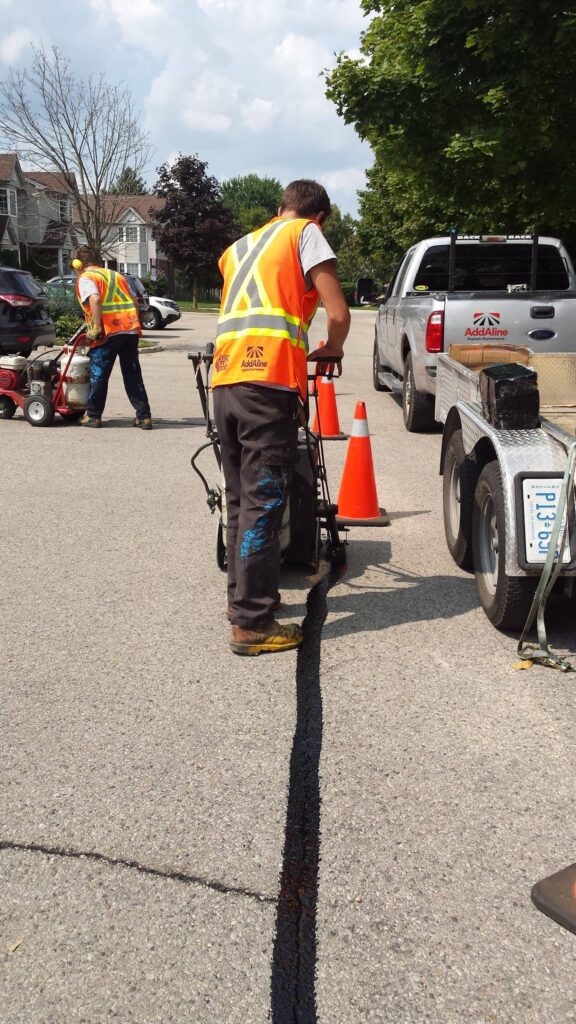
Hot rubber crack filling is the most cost-effective preventative maintenance investment you can make in your parking lot. When water enters cracks in your asphalt, it works its way into the sub-base. When that water freezes, it expands — and that expansion accelerates the breakdown of your pavement from the inside out.
Preparation is the secret to good crack fill. Before applying anything, cracks should be cleaned and cleared of sand, gravel, and dirt so the hot rubber bonds properly to the sides of the crack and stays in place longer. Addaline uses an asphalt crack hoe — which looks similar to a blow torch — to etch and clean cracks before applying the hot rubber. This step is often skipped by less experienced contractors, and it’s one of the key reasons why a quote from a reputable company may differ from one you get from someone with a pickup truck.
Ideally, cracks should be about a pencil-width wide — enough space for the hot rubber to flow in and seal effectively, similar to an hourglass. Very fine surface cracks may not need filling; applying crack fill material to hairline cracks without enough depth can cause it to behave more like sealcoating and peel off quickly.
Hot rubber sealant is heated and applied directly into cracks, bonding to the asphalt and creating a flexible, water-resistant seal that moves with the pavement through temperature changes. Done regularly — typically every 2–3 years — crack filling can dramatically extend the life of your parking lot and push back the much larger expense of full repairs or repaving.
Crack sealing an entire lot is a fraction of what ignoring those cracks will eventually cost. This is exactly the kind of maintenance that keeps a good parking lot from becoming a problem parking lot.
Asphalt Patching and Repairs
When damage goes beyond surface cracking — potholes, alligator cracking, depressions, or areas where the sub-base has been compromised — you need more substantial repairs. There are two primary methods:
Infrared repair uses specialized equipment to re-heat the existing asphalt, which is then reworked into a smooth surface and compacted. This approach is seamless, fast, and produces a repair that blends with the surrounding pavement. Addaline uses infrared technology to deliver repairs that are virtually invisible and significantly more durable than cold patch alternatives. Infrared repairs are ideal for most moderate damage scenarios and produce a high-quality, long-lasting result.
Saw cut and replace involves removing the damaged section of asphalt entirely and replacing it with fresh hot mix. This method is typically used when transitioning from one material to another — for example, when a catch basin is surrounded by concrete that meets asphalt. The precision of a saw cut produces clean edges and a better long-term result than a rough break.
The important thing to understand is that these repairs are targeted. Addaline isn’t repaving your entire lot — we’re addressing the problem areas precisely. That precision is what makes the cost manageable for most property owners.
Catch Basin Restoration and Replacement
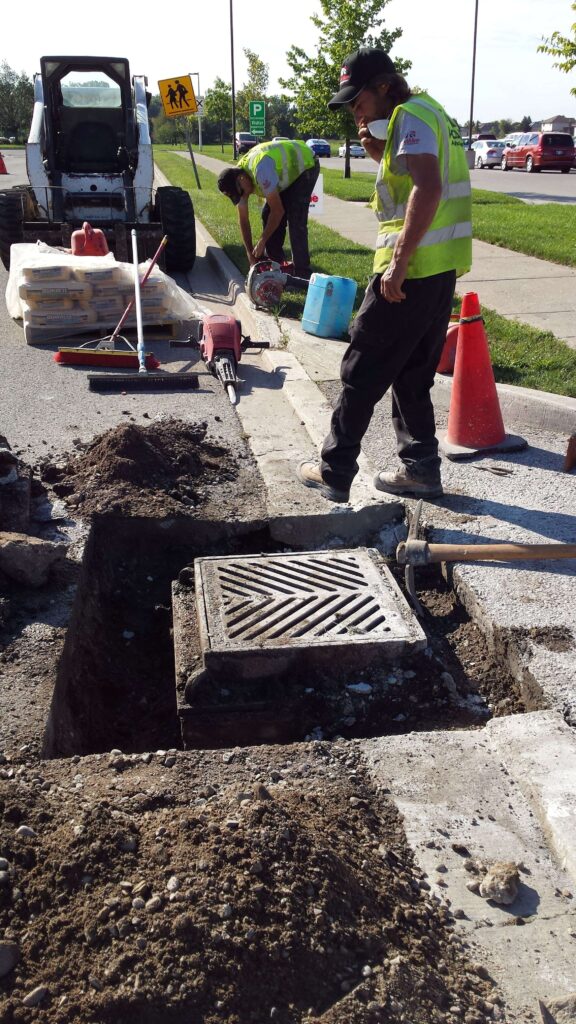
Catch basins are the drainage structures in your parking lot that collect runoff and direct it away from the pavement surface. When they fail — whether through settling, cracking, or deterioration of the frame and grate or risers inside — they become both a liability hazard and a significant contributor to pavement failure in the surrounding area.
Minor catch basin restoration — repairing the surrounding asphalt and resetting a settled frame — is generally at the more accessible end of the cost spectrum. Full replacement of a deteriorated catch basin structure is a larger investment, but far less costly than dealing with widespread drainage failures that spread across your lot over time.
Drainage is one of the most commonly overlooked aspects of parking lot maintenance — and one of the most damaging when neglected. The City of Toronto’s stormwater management guidelines are a useful reference for property managers in the GTA, and similar standards apply across Ontario municipalities.
Parking Lot Line Painting
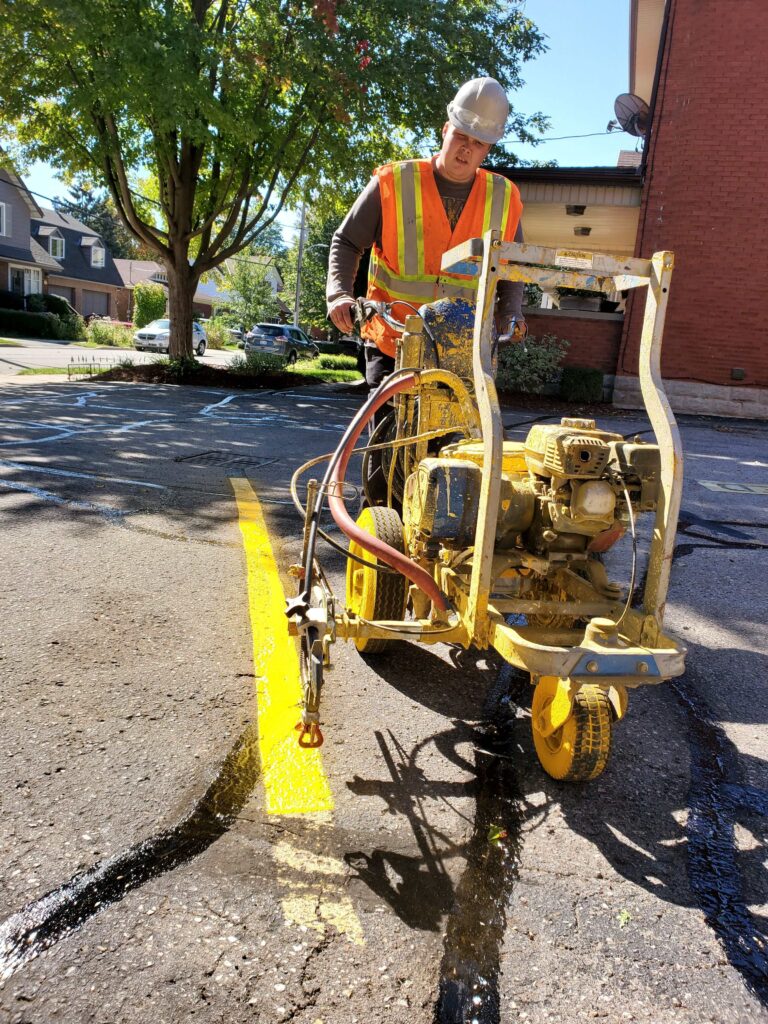
Fresh, clearly visible line markings aren’t just about aesthetics — they’re a liability and traffic management issue. Faded lines lead to confusion, poor traffic flow, and increased risk of incidents on your property. In Ontario, accessible parking designations, fire route markings, and directional indicators are also regulatory requirements that must be maintained.
Parking lot line painting includes standard stall lines, directional arrows, fire routes, accessible parking symbols, and other markings. Cost depends on lot size, complexity, and whether any surface preparation is required. Most commercial lots need repainting every 1–3 years depending on traffic volume and weather exposure.
Bollard and Sign Installation
Bollards and signage protect your property, direct traffic, designate accessible parking, mark fire routes, and keep pedestrians safe. Whether you’re adding new bollards to protect storefront entrances or replacing damaged ones, this service is often bundled with broader parking lot maintenance projects for efficiency.
Concrete Repairs
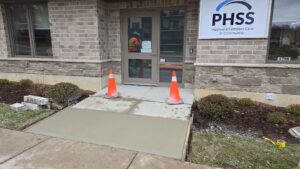
Many parking lots include concrete elements — curbs, sidewalks, wheel stops, traffic islands, and accessibility ramps. Concrete repairs and replacement address cracking, spalling, settling, and trip hazards that create real liability exposure for property owners.
Under Ontario’s Occupiers’ Liability Act, property owners have a legal duty of care to ensure their premises are reasonably safe. Cracked curbs and deteriorating sidewalks are exactly the kind of conditions that lead to injury claims — and they’re almost always far cheaper to fix than to defend. For more on what that liability exposure looks like in practice, see our article on how neglected asphalt leads to lawsuits.
The Real Cost of Doing Nothing
Here’s the number that most property managers don’t factor into their maintenance planning: the cost of waiting.
According to the Transportation Association of Canada, pavement management studies consistently show that preventative maintenance applied at the right time costs 4–5 times less than the reactive repairs required when that maintenance is neglected. Wait long enough, and even repairs won’t be enough — you’ll be looking at full repaving, which is a significant capital investment most property owners aren’t budgeted for in any given year.
Large paving companies are built for volume. They may need to start from beneath the parking lot — building a new sub-base and ensuring proper slope and aggregate compaction to drain water away — before they ever lay new asphalt. The old asphalt also needs to be removed and disposed of, which is necessary but adds considerably to the cost. Full repaving is the right solution when a parking lot has reached end of life, but it’s a major undertaking that most commercial properties aren’t at yet.
Another alternative — but one that Addaline does not perform — is milling down the surface of the asphalt and repaving over top of the existing pavement. You’ll see this technique on major highways like the 401. For it to be cost-effective and durable, specific conditions need to be met: the existing asphalt must be thick enough to mill down, must still have good slope, and must have minimal cracking. If there are significant cracks already, they’ll eventually return through the new asphalt layer — this is called reflective cracking. It’s a technique that works well under the right engineering conditions but isn’t the right solution for most commercial parking lots.
This is the real value Addaline provides. We’re not replacing your parking lot. We’re buying you time — often years — to plan for that eventual capital expense while keeping your lot safe, functional, and looking professional in the meantime.
For property managers dealing with an urgent problem — a pothole that’s become a safety hazard, a sunken catch basin creating a liability — Addaline can often address that immediate issue quickly and affordably, removing the pressure of emergency repaving decisions and giving you the runway to budget properly.
We explore the long-term math further in our article on how regular asphalt maintenance saves your business thousands in repairs.
Getting the Timing Right
Timing matters just as much as the type of repair. Ontario’s climate creates natural windows where asphalt maintenance is most effective:
Spring is a priority season. After a long winter, your lot will show all the damage that freeze-thaw cycling has caused. Addressing cracks and potholes early in spring prevents water infiltration through the warm months — infiltration that would otherwise accelerate deterioration.
Summer offers ideal conditions for most asphalt work. Warmer temperatures allow hot mix asphalt to compact and cure properly, and dry conditions are optimal for crack sealing and line painting.
Fall is your last opportunity to address issues before winter arrives. Filling cracks in the fall seals water out before freeze-thaw cycles resume — arguably the single most important preventative step you can take each year.
For property managers juggling multiple sites and competing priorities, our guide to scheduling asphalt repairs is a practical resource for building a maintenance calendar that actually works.
What to Look for in an Asphalt Maintenance Quote
Not all quotes are equal. When you’re comparing proposals for parking lot maintenance, here are the things that actually matter:
Itemized scope. A good quote clearly describes what work will be performed, exactly where, and using what method. Vague, lump-sum quotes are a warning sign.
Method specificity. Is crack filling hot rubber or cold pour? Is patching infrared or saw cut and replace? The answers matter significantly for both durability and cost. Make sure you’re comparing like to like.
Warranty. Ask about the warranty on completed work. At Addaline, we back our repairs with an industry-leading warranty because we’re confident in the quality of our work and the materials we use.
Communication. You should know when crews will arrive, how long work will take, and how your property will be managed during the project. At Addaline, clear communication isn’t an afterthought — it’s central to how we operate. Photos of completed work are sent with invoicing so you have a clear record of everything that was done without requiring an on-site walkthrough that takes time out of your schedule.
Commercial experience. Look for contractors with a verifiable track record in commercial asphalt maintenance — not just residential driveway work. Read what property managers and facility managers say about working with Addaline.
How Addaline Approaches Parking Lot Maintenance
Since 2004, Addaline Asphalt Maintenance has been helping property managers, commercial owners, municipalities, and facility managers across Southwestern and Southeastern Ontario get more life out of their parking lots — without unnecessary repaving.
Our approach is targeted and honest. We assess your lot, identify what actually needs attention, and give you a clear, itemized proposal that addresses real problems with real solutions. We use infrared technology for seamless repairs, hot rubber for crack sealing, and trained crews who take the time to do the work right.
We serve properties across Ontario — from London and Kitchener-Waterloo to Hamilton, the Greater Toronto Area, Burlington, Oshawa, and everywhere in between. Whether you’re managing one property or a portfolio of locations, we can help you build a maintenance plan that makes financial sense and keeps your parking lots safe year-round.
Ready to Find Out What Your Parking Lot Actually Needs?
You don’t need to guess at costs, and you don’t need to commit to a repaving project you might not need. The best first step is a professional assessment of your specific property.
Request a free quote from Addaline and get a clear, honest picture of what your parking lot needs, what it will cost, and what you can realistically expect in terms of timeline and results. No vague estimates, no pressure to sign off on unnecessary work.
Call us at 1-888-355-5750 or request your quote online. We’ve been taking care of Ontario parking lots since 2004, and we’re ready to help you get more life out of yours.

Robin Farley is the VP of Marketing and Sales at Addaline Asphalt Maintenance, where she has been helping educate commercial property owners and facility managers since 2012. With a background in journalism, communications, and fundraising, Robin specializes in simplifying complex parking lot maintenance topics into practical, informative resources. She developed Addaline’s Asphalt 101 educational program and regularly writes about asphalt repairs, pavement maintenance, and long-term asset management for commercial properties.
