

Quick Answer: How Do You Plan a Parking Lot Maintenance Budget?
To plan a parking lot maintenance budget for next year, start with a fall condition assessment of your lot. Sort what you find into three groups: safety issues to fix right away, preventative work that stops damage from spreading, and larger capital items to plan for over time. Protect your preventative work, like hot rubber crack filling, schedule repairs by season, set aside a contingency for winter damage, and get itemized quotes early. A professional assessment turns guesswork into real numbers.
Why Fall Is the Best Time to Plan
Most commercial properties and condominium corporations set next year’s budget in the fall. That timing works in your favour.
By now, your lot has been through a full season of traffic. Problems are easy to see, and snow isn’t hiding them yet. You also still have time to act. Filling cracks in the fall seals water out before Ontario’s freeze-thaw cycles start again, which is one of the most useful things you can do for your pavement all year.
There’s one more reason. When spring comes, every property manager in the province calls their contractor at the same time. If your plan and your quotes are already in place, you’re at the front of the line instead of the back.
Step 1: Walk Your Lot, or Have It Assessed
You can’t budget for what you haven’t seen. Start with a walk-through, ideally on a dry day and again after a heavy rain.
Here’s what to look for:
- Cracks. Note long straight cracks, cracks that run across the lot, and patterns that look like a spiderweb or alligator skin. That last one often means the base underneath is starting to fail.
- Potholes and low spots. Look for holes, dips, and anywhere water pools after it rains.
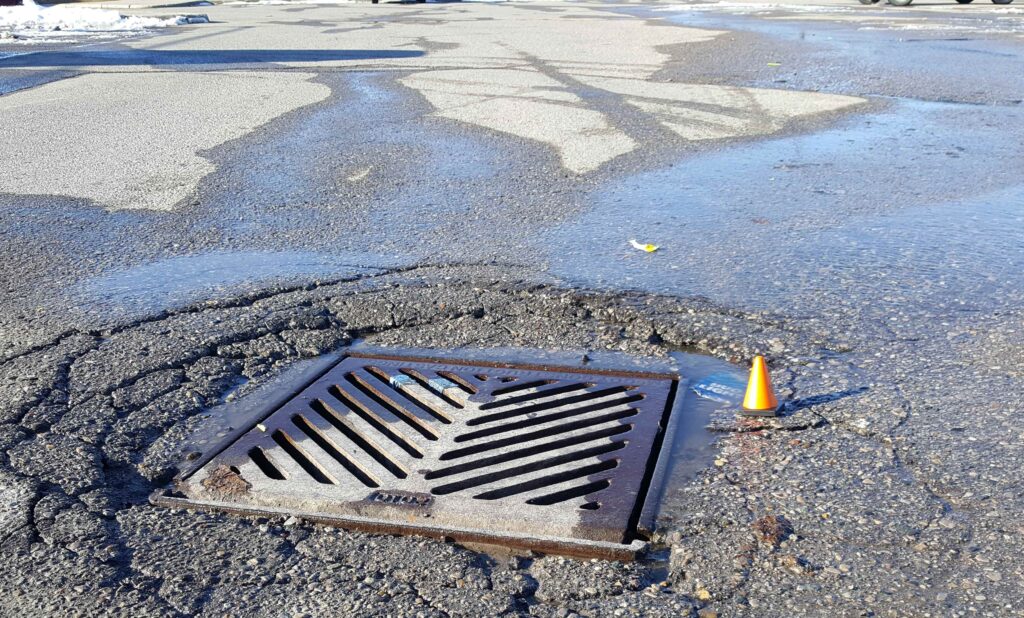
- Catch basins. Watch for frames that sit above the pavement and no longer drains water away, cracked frames and grates, cracked asphalt around the edge of a catch basin, or water that isn’t draining.
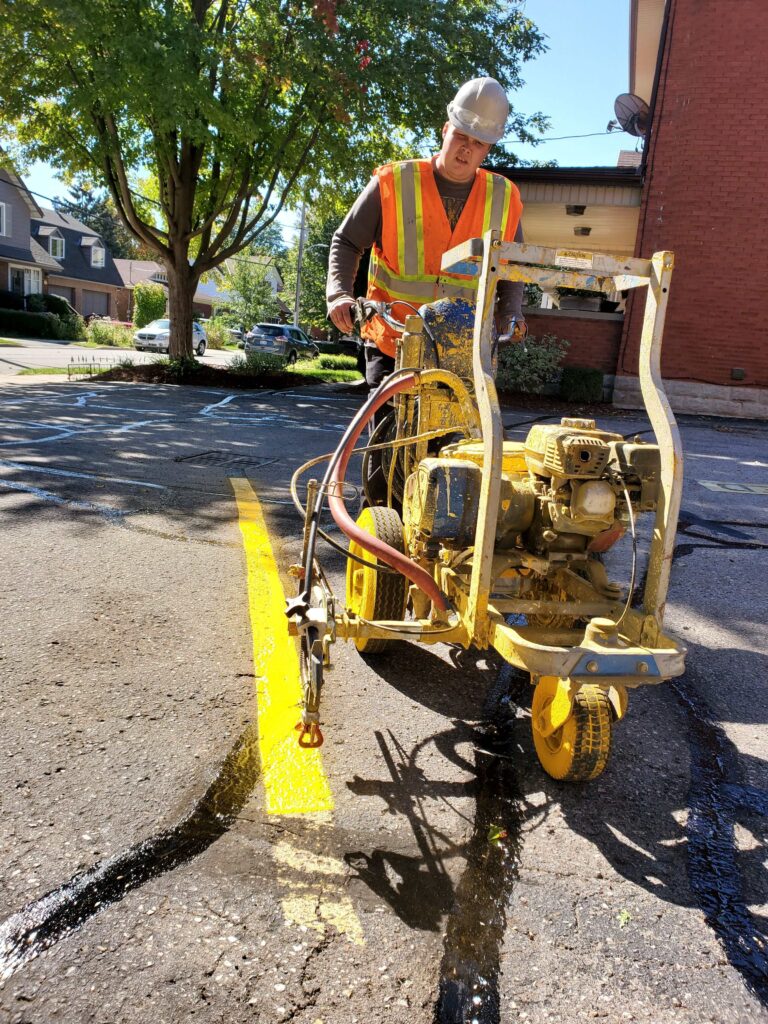
- Line markings. Check stall lines, fire routes, directional arrows, and accessible parking spaces. Faded lines are a safety issue, not just a cosmetic one.
- Concrete. Look at curbs, sidewalks, islands, and ramps for cracks, heaving, and trip hazards.
- Bollards and signs. Note anything that’s damaged, leaning, missing, or hard to read.
Take photos and mark where each problem is on a simple site map. If you do this every year, you’ll start to see which areas are getting worse and how quickly.
If you manage several properties, or you’d rather have an expert eye on it, a professional assessment is the fastest way to get a clear picture. Addaline will walk your site, identify what actually needs attention, and give you an itemized proposal you can take straight into your budget.
Step 2: Sort What You Find Into Three Groups
Not everything on your list needs to happen at once. Sorting your findings makes your budget easier to build and easier to defend.
Group 1: Safety and liability (fix now). These are the items that could hurt someone or damage a vehicle. Think potholes in walking paths, trip hazards on sidewalks and curbs, catch basins which no longer drain water away, and faded fire routes or accessible parking markings. Under Ontario’s Occupiers’ Liability Act, property owners have a duty to keep their premises reasonably safe. Accessible parking also has its own requirements under Ontario’s Integrated Accessibility Standards. These items go to the top of the list. You can read more in our article on parking lot maintenance and liability in Ontario.
Group 2: Preventative maintenance (fix soon). This is work that stops small problems from turning into big ones. Crack filling and small patches belong here. It’s also where your maintenance dollars work the hardest.
Group 3: Planned capital work (plan for later). These are larger items, like widespread pavement failure, full catch basin replacement, or eventual reconstruction. They don’t all need to happen next year, but they should be on your radar with a rough timeline. If you’re not sure whether an area needs repair or replacement, our guide on parking lot repair vs. replacement can help.
Step 3: Protect Your Preventative Maintenance Line
When budgets get tight, preventative maintenance is often the first thing cut. It feels safe to skip. Nothing is broken yet, right?
This is the most expensive mistake in parking lot budgeting.
Here’s why. When water gets into a crack, it seeps down into the base under your asphalt. In winter, water freezes and expands. In spring, it thaws and leaves a gap. Repeat that a few dozen times over an Ontario winter, and a small crack becomes a pothole, and a pothole becomes a failed section of pavement.
Hot rubber crack filling stops that cycle by sealing the water out. It’s one of the most affordable services you can put in your budget, and done every two to three years, it can add years to the life of your lot. Cutting it to save money this year usually means spending much more on repairs later.
If you need to make the case to an owner or a board, our article on how regular asphalt maintenance saves your business thousands lays out the long-term math.
Step 4: Plan Your Work by Season
Spreading work across the year helps your cash flow and makes sure each job happens when conditions are right.
Spring is for winter recovery. Once the snow is gone, you’ll see what freeze-thaw and snowplows left behind. This is the time for pothole repairs, catch basin fixes, and damaged curbs and bollards.
Summer is ideal for most asphalt and concrete work. Warm, dry weather helps repairs set properly, and it’s the best time for parking lot line painting so the paint job lasts the longest, markings are fresh and bright.
Fall is your last chance before winter. Crack filling at this time of year seals out water before freeze-thaw begins. It’s also the right time to reassess your lot and plan for the next budget cycle.
For a practical checklist you can use to schedule work across your properties, see what property managers need to know before scheduling asphalt repairs. And if you’re wondering how often each type of work should be done, our guide on how often a commercial parking lot should be maintained covers it in detail.
Step 5: Set Aside a Contingency for Winter Surprises
No one can predict an Ontario winter. A mild season might leave your lot in good shape. A hard one, with lots of freeze-thaw swings, can open up potholes in places that looked fine in October.
Snow removal adds its own wear. Plows catch curbs, scrape catch basin frames, and knock over bollards and signs.
That’s why it’s smart to include a contingency line in your budget. Size it to the age and condition of your lot. An older lot with a lot of cracking needs more cushion than a newer one that’s been well maintained. If you don’t use it, great. If you do, you won’t be scrambling for approval in April.
Step 6: Separate Operating Costs From Capital Costs
It helps to keep routine maintenance and big projects in different buckets.
Operating costs are the regular, predictable work: crack filling, patching, line painting, small concrete repairs, and replacing a damaged sign or bollard.
Capital costs are the larger, less frequent projects, like major reconstruction or full replacement of drainage structures.
Keeping them separate makes your budget easier to read. It also shows owners and boards a clear story: here’s what we spend each year to protect the asset, and here’s what we’re planning for down the road.
For condominium corporations, this ties directly into your reserve fund study. The Condominium Authority of Ontario’s guide to reserve funds is a helpful resource for boards and managers. Good ongoing maintenance can help your parking lot reach, or even outlast, the life expectancy set out in your study.
Here’s the good news for everyone: targeted repairs buy time. Fixing the problem areas now can push a major capital project further into the future, which gives you more time to plan and fund it properly.
Step 7: Managing Multiple Properties? Budget as a Portfolio
If you look after several sites, planning them together can save you time and money.
- Rank sites by condition. Put your budget where the need is greatest, rather than splitting it evenly.
- Bundle work where you can. Grouping services on one site, or scheduling nearby sites back to back, is often more efficient than one-off visits.
- Use one trusted contractor. One point of contact, consistent quality, and one set of records make your job much simpler.
- Keep good records. Photos and clear invoices help you track what was done, where, and when. Addaline sends photos of completed work with every invoice, so you have a record without needing to visit the site.
Step 8: Get Itemized Quotes Early
A vague quote makes a vague budget. When you ask for quotes, look for:
- A clear scope. What work will be done, exactly where, and how much of it.
- The method. Is crack filling hot rubber or cold pour? Is patching done with infrared or saw cut and replace? These choices affect how long the repair lasts.
- A warranty. Ask what’s covered and for how long.
- A timeline. When crews will arrive, how long the work will take, and how traffic will be managed.
Getting quotes in the fall means your budget is built on real numbers, not estimates. For more on what drives the cost of each service, see our guide on how much parking lot asphalt maintenance costs.
Common Budgeting Mistakes to Avoid
- Copying last year’s number. Your lot changes every year. Your budget should too.
- Cutting preventative work first. It’s the cheapest line on your budget and the one that saves you the most.
- Budgeting for sealcoating. Sealcoating is a cosmetic surface coating. It looks good for a season or two, but it doesn’t fix cracks, drainage problems, or base failures. Addaline doesn’t offer it, and we don’t recommend spending your budget on it.
- Waiting until spring to get quotes. By then, contractor schedules fill up fast.
- Forgetting the smaller items. Line painting, signs, bollards, and concrete curbs add up. Give them their own lines.
- Assuming repaving is the only answer. Most lots need targeted repairs, not a new parking lot.
A Simple Budget Framework You Can Use
Use this as a starting point for your own plan. Every property is different, so your quote and assessment will fill in the actual numbers.
Budget Line | What It Covers | When | Budget Type |
|---|---|---|---|
Safety repairs | Potholes, trip hazards, sunken catch basins | As soon as possible, often spring | Operating |
Preventative maintenance | Hot rubber crack filling | Every 2 to 3 years, spring or fall | Operating |
Asphalt patching | Infrared or saw cut and replace repairs | Spring to fall | Operating |
Drainage | Catch basin restoration or replacement | Spring to fall | Operating or capital |
Line painting | Stalls, fire routes, accessible parking, arrows | Late spring to summer, every 1 to 3 years | Operating |
Concrete | Curbs, sidewalks, islands, ramps | Spring to fall | Operating or capital |
Bollards and signs | Repairs, replacements, new installs | As needed | Operating |
Contingency | Winter damage and surprises | Year-round | Operating |
Long-term capital | Major reconstruction | Planned years ahead | Capital or reserve fund |
How Addaline Helps You Budget With Confidence
Since 2004, Addaline Asphalt Maintenance has helped property managers, condominium corporations, commercial owners, and municipalities across Ontario get more life out of their parking lots.
We start by assessing your site and telling you what actually needs attention, and what can wait. You get a clear, itemized proposal you can drop right into your budget. We use hot rubber for crack filling and infrared technology for seamless, long-lasting repairs, and we back our work with an industry-leading warranty.
We work with properties across the province, including London, Kitchener-Waterloo, Hamilton, Burlington, the Greater Toronto Area, Oshawa, Barrie, Windsor, and many communities in between. Read what property managers say about working with Addaline.
Ready to Build Next Year’s Budget on Real Numbers?
You don’t have to guess. A professional assessment this fall gives you a clear list of what your lot needs, what can wait, and what it will cost.
Request a quote from Addaline or call us at 1-888-355-5750. We’ll help you plan a budget that protects your pavement, keeps your property safe, and holds up when owners or board members start asking questions.

Robin Farley is the VP of Marketing and Sales at Addaline Asphalt Maintenance, where she has been helping educate commercial property owners and facility managers since 2012. With a background in journalism, communications, and fundraising, Robin specializes in simplifying complex parking lot maintenance topics into practical, informative resources. She developed Addaline’s Asphalt 101 educational program and regularly writes about asphalt repairs, pavement maintenance, and long-term asset management for commercial properties.
