

Quick Answer: What Does Winter Do to a Parking Lot?
Winter damages parking lots mainly through freeze-thaw cycles. Water seeps into cracks, freezes, expands, and breaks the asphalt apart from the inside, which creates potholes and wider cracks. Snowplows also scrape pavement, curbs, catch basins, and bollards, while salt wears down concrete, asphalt and line paint. In spring, sweep the lot, walk it after a rain, fix safety hazards first, seal cracks with hot rubber, and repair potholes properly before small problems grow.
What Winter Really Does to Your Parking Lot
The Freeze-Thaw Cycle: Winter’s Biggest Threat
If there’s one thing to understand about winter pavement damage, it’s this: water is the enemy, and ice makes it worse.
Here’s how it works. Rain and melting snow seep into cracks in your asphalt. When the temperature drops, that water freezes and expands. Ice takes up more space than water, so it pushes the crack wider and lifts the pavement around it. When the temperature rises, the ice melts, leaving a bigger gap for even more water to fill.
Now repeat that over and over. Southern Ontario winters often swing above and below freezing many times in a single season, sometimes in the same week. Every one of those swings opens your cracks a little further.
Over time, water also reaches the gravel base underneath your asphalt. Once the base softens, the pavement on top loses its support. That’s when you start to see potholes, sinking areas, and the spiderweb pattern known as alligator cracking.
Potholes Form Fast
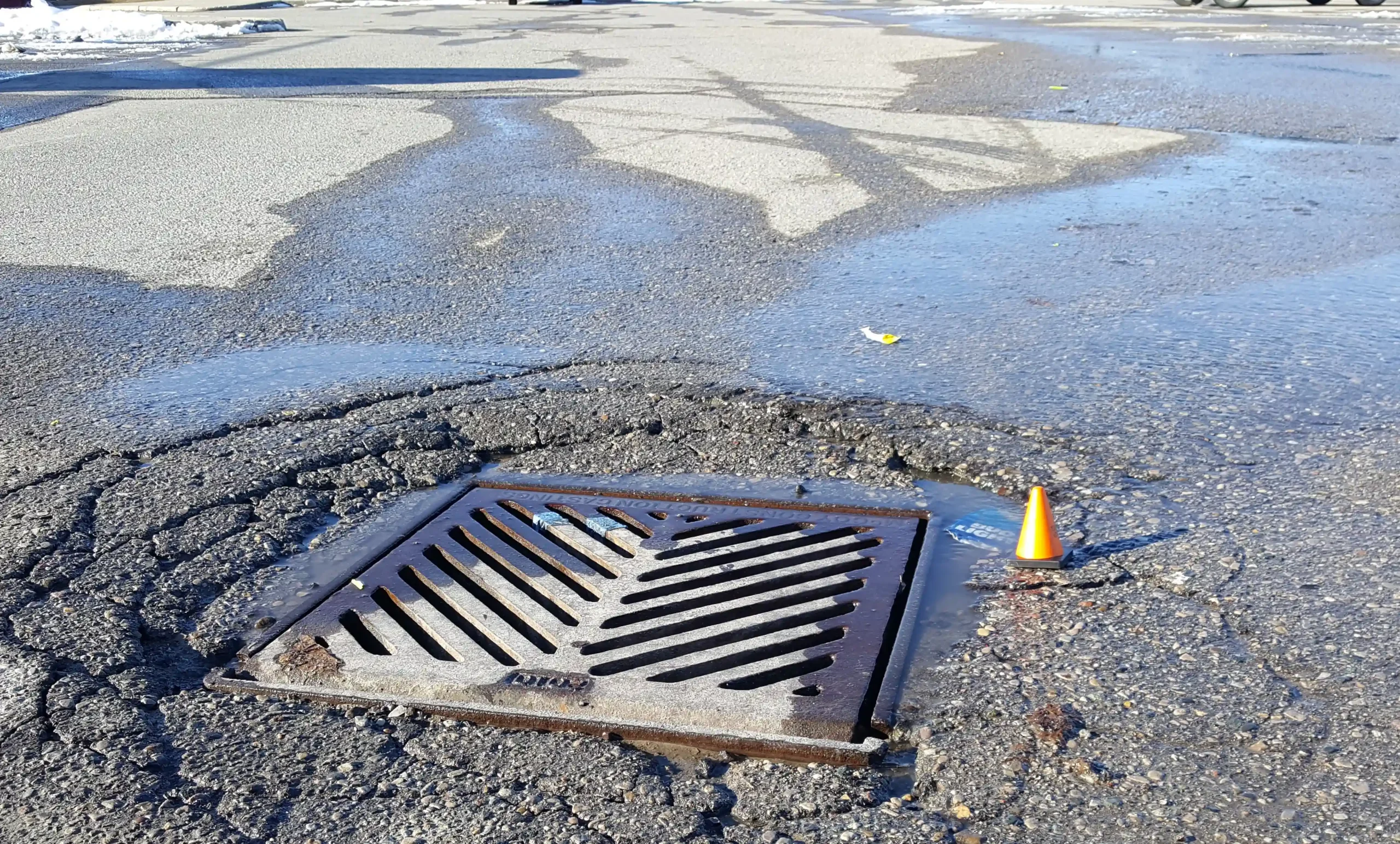
Potholes are the most visible sign of a hard winter. They form when the base under the asphalt has been weakened by water, and the weight of vehicles breaks through the surface.
What starts as a small crack in the fall can turn into a full pothole by March. And once a pothole forms, it grows quickly. Every car that drives over it knocks loose more of the edge.
Snowplows Take Their Toll
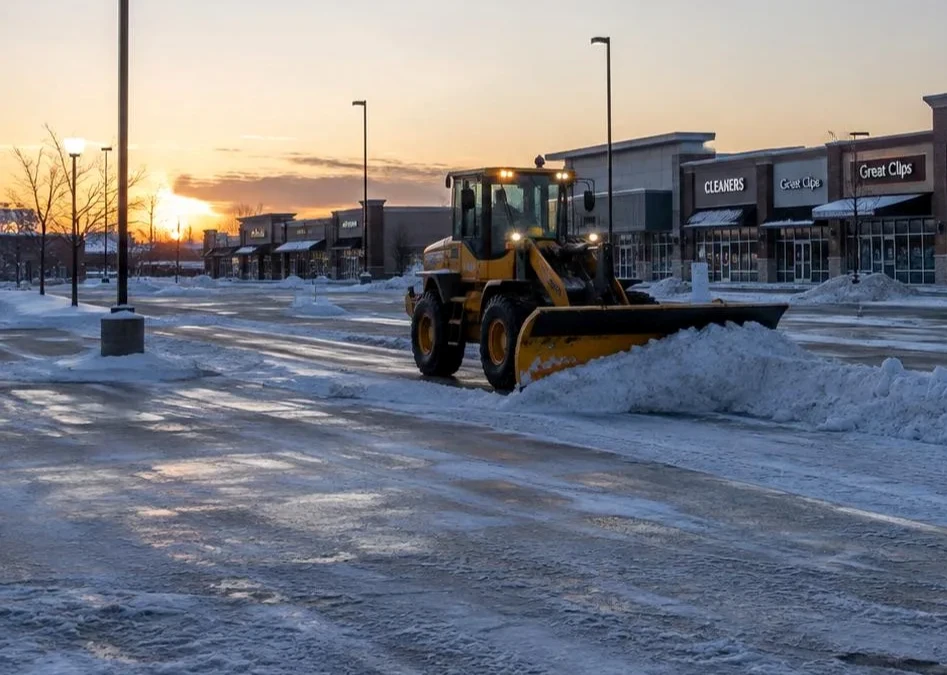
Snow removal is essential, but it’s hard on your property. Plow blades can:
- Scrape and gouge the asphalt surface
- Catch the edges of cracks and lift pieces of pavement
- Chip or break concrete curbs and islands
- Hit catch basin frames and knock them out of position and/or crack them
- Bend or knock over bollards and signs
- Wear away line markings
Snowbanks piled in the same spot all winter can also add weight to one area and send meltwater across the lot every time the temperature rises.
Salt Is Tough on Concrete and Line Paint
Road salt and de-icers keep people safe, so they’re a must. But they come with trade-offs. Salt is especially hard on concrete, including curbs, sidewalks, and ramps. It can cause the surface to flake and crumble, which is known as spalling. It also speeds up the fading of your line markings.
Salt also melts snow into water, which can then work its way into cracks and refreeze overnight. That adds more freeze-thaw stress to your pavement.
If you’d like to learn more about using salt responsibly on private property, the Smart About Salt Council offers training and best practices for property managers and snow contractors across Ontario.
Drainage Problems Get Worse
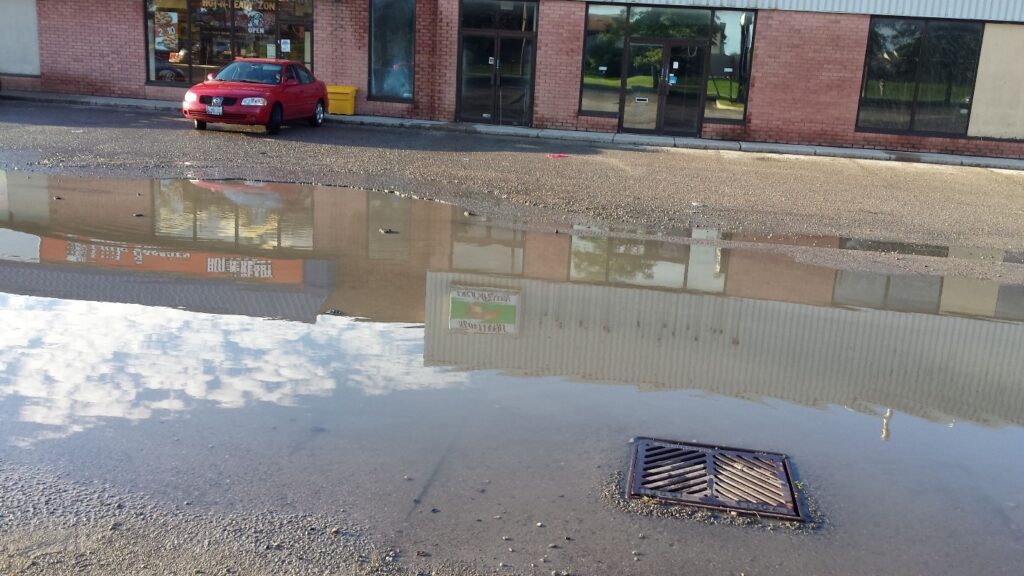
Catch basins work hard all winter. When they’re blocked by ice, snowbanks, sand, or debris, meltwater has nowhere to go. It pools on the surface, refreezes into slippery patches, and soaks into any cracks nearby.
Damaged catch basins are one of the most common sources of spring pavement failure. Another problem is pavement around a catch basin settling. When a catch basin becomes a high point in the parking lot the water won’t drain away. Water doesn’t go up hill. The asphalt and catch basins take a beating from both water and plows. Our Catch Basins & Concrete 101 webinar explains why these structures matter so much.
Signs Your Parking Lot Had a Rough Winter
Once the snow is gone, take a walk around your lot. Watch for:
- New potholes, especially near entrances, drive lanes, and catch basins
- Cracks that are wider or longer than they were last fall
- Alligator cracking, a spiderweb pattern that often means the base is failing
- Low spots where water pools after rain
- Catch basin frames that have sunk below the pavement or higher than the surrounding pavement
- Chipped, cracked, or flaking concrete curbs and sidewalks
- Bent, leaning, or missing bollards and signs
- Faded or scraped-off line markings, fire routes, and accessible parking symbols
Take photos and note where each problem is. That record will help you prioritize repairs and plan your budget.
What You Can Do Before Winter Hits
Since winter is almost here, there are a few smart steps to take now:
- Seal open cracks. If there’s still a dry stretch of weather, hot rubber crack filling seals water out before freeze-thaw season begins. It’s one of the most cost effective and best things you can do for your pavement all year.
- Fix serious hazards. A pothole or too high catch basin will only get worse under snow and plows. Deal with the urgent ones now.
- Mark your obstacles. Make sure your snow contractor knows where catch basins, curbs, islands, and bollards are. Snow stakes help plow operators avoid them.
- Plan your snow piles. Ask your contractor to pile snow away from catch basins and where meltwater can drain safely.
- Keep your records. In Ontario, anyone injured by snow or ice on private property generally has to give written notice within 60 days under the Occupiers’ Liability Act. Good maintenance and snow removal records protect you. Our article on parking lot maintenance and liability in Ontario covers your responsibilities in more detail.
Your Spring Parking Lot Recovery Plan
When spring arrives, here’s how to bring your lot back to good shape, step by step.
1. Clean It Up
Start with a thorough sweep. Winter leaves behind sand, salt, gravel, and debris that can hide damage and clog catch basins. A clean lot shows you exactly what you’re dealing with.
2. Walk the Lot After a Rain
A rainy day is your best inspection tool. Pooling water shows you where drainage isn’t working and where the pavement has started to sink. Make a note of every puddle that’s still there a few hours after the rain stops.
3. Fix Safety Hazards First
Some problems can’t wait. Potholes in drive lanes and walking paths, sunken catch basins or catch basins that are too high, trip hazards on sidewalks, and missing signs all create risk for your tenants, customers, and visitors. Put these at the top of your list.
4. Repair Potholes Properly
Over the winter, potholes are often filled with cold patch. That’s fine as a short-term fix, but cold patch is a temporary material. It often loosens and pops out within weeks or months.
Spring is the time for a proper, lasting repair. Addaline uses infrared technology to heat the existing asphalt, rework it, and compact it into a smooth, seamless patch that bonds with the surrounding pavement. For larger failures, saw cut and replace removes the damaged section entirely and replaces it with fresh hot mix. Learn more about our asphalt repairs and maintenance.
5. Seal Cracks Before They Grow
Cracks that survived the winter will keep letting water in through spring and summer rains. Hot rubber crack filling seals them, so water stays out and the base stays dry. Proper prep matters. Addaline cleans and etches each crack before applying hot rubber, so it bonds well and lasts.
6. Restore Drainage and Concrete
Have damaged catch basins reset or rebuilt so water flows where it should. Repair broken curbs, flaking sidewalks, and damaged islands before they become bigger safety issues. Our catch basin restoration and concrete repair services cover both.
7. Refresh Your Lines, Signs, and Bollards
Once repairs are done, it’s time for fresh markings. Clear stall lines, fire routes, and accessible parking spaces keep traffic moving safely and help you meet your obligations. Parking lot line painting and bollard and sign installation finish the job.
8. Book Early
Spring is the busiest time of year for asphalt contractors. Every property manager in Ontario is looking at the same winter damage at the same time. Booking your assessment early, even before the snow melts, puts you near the front of the line. Our scheduling checklist for property managers can help you plan.
A Quick Word About Sealcoating
You may get offers in spring to sealcoat your lot so it looks fresh again. We’d encourage you to think twice.
Sealcoating is a cosmetic coating. It covers up the surface for a season or two, but it doesn’t repair cracks, fix drainage, or restore a weakened base. After an Ontario winter, the damage you need to deal with is structural. Covering it up doesn’t stop it from getting worse underneath. Addaline doesn’t offer sealcoating, and we focus on repairs that deal with the actual cause of the damage.
Why Addaline
Since 2004, Addaline Asphalt Maintenance has helped property managers, condominium corporations, commercial owners, and municipalities across Ontario repair winter damage and get more life out of their parking lots.
Here’s what you can expect when you work with us:
- Honest assessments. We tell you what needs attention now, and what can wait.
- Targeted repairs, not unnecessary repaving. Most lots need repairs, not replacement. Our guide on parking lot repair vs. replacement explains the difference.
- Proven methods. Infrared asphalt repairs and hot rubber crack filling deliver seamless, long-lasting results.
- An industry-leading warranty. We stand behind our work.
- Clear communication. You’ll know when our crews are coming, and you’ll receive photos of completed work with your invoice.
- Ontario experience. We know what our winters do to pavement, because we’ve been repairing it for over 20 years.
We serve properties across the province, including London, Kitchener-Waterloo, Hamilton, Burlington, the Greater Toronto Area, Barrie, Oshawa, Kingston, Windsor, and many communities in between. See what our clients say in our client reviews.
Don’t Let Winter Damage Turn Into a Bigger Bill
Every week that winter damage is left alone, it gets worse and more expensive to fix. A pothole you repair in April costs far less than the failed section of pavement it can become by fall.
Get ahead of the spring rush. Request a quote from Addaline or call us at 1-888-355-5750. We’ll assess your lot, show you what winter left behind, and give you a clear, itemized plan to fix it properly.
Planning next year’s spending? Our guide on how to plan your parking lot maintenance budget can help you set aside the right amount for spring repairs.

Robin Farley is the VP of Marketing and Sales at Addaline Asphalt Maintenance, where she has been helping educate commercial property owners and facility managers since 2012. With a background in journalism, communications, and fundraising, Robin specializes in simplifying complex parking lot maintenance topics into practical, informative resources. She developed Addaline’s Asphalt 101 educational program and regularly writes about asphalt repairs, pavement maintenance, and long-term asset management for commercial properties.
