

Why Maintenance Frequency Matters More in Ontario
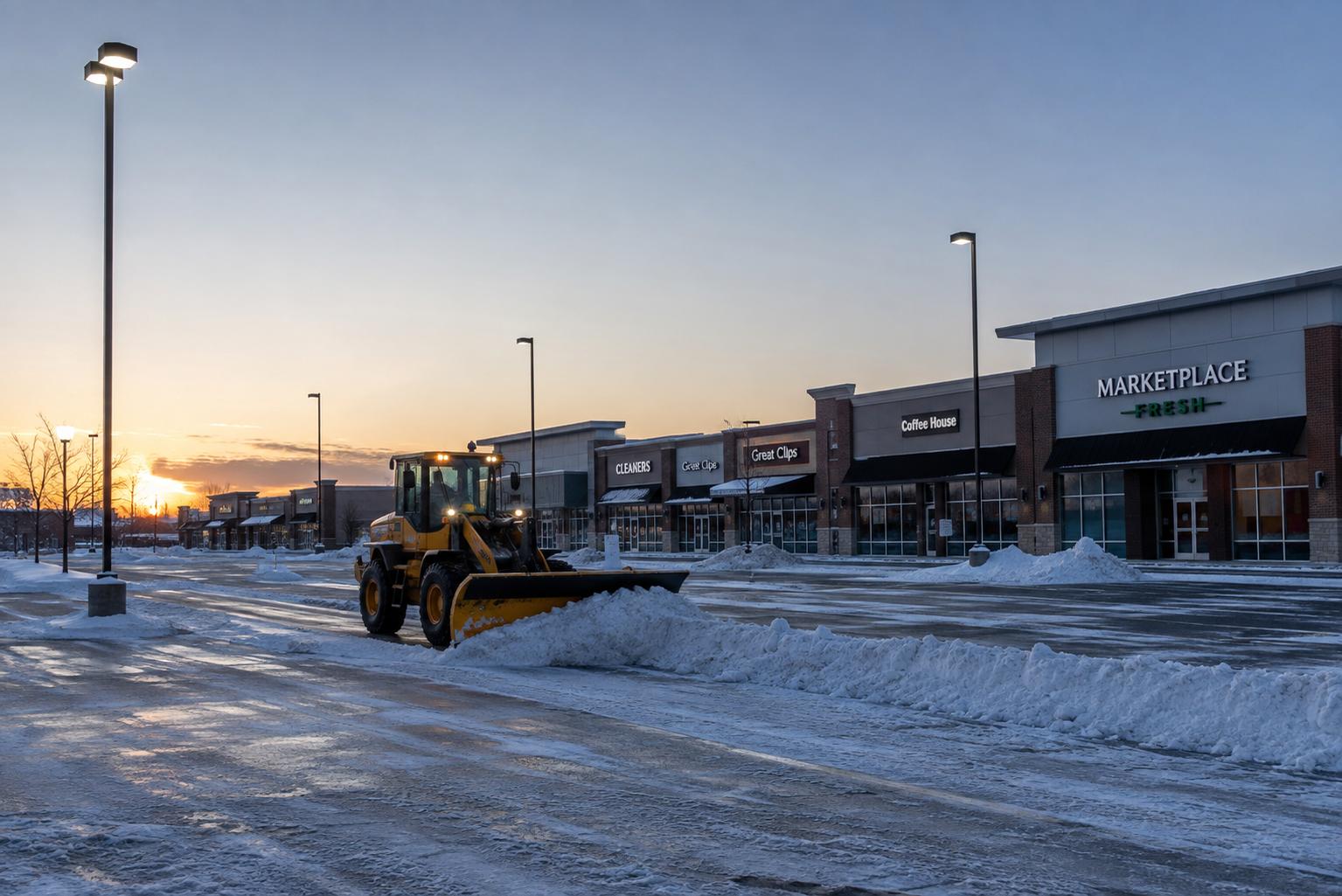
Ontario’s climate is one of the harshest environments for asphalt pavement in the world. The province experiences an average of 100 or more freeze-thaw cycles per year, particularly in Southern Ontario. Each cycle forces water that has seeped into small surface cracks to expand and contract — gradually widening those cracks, compromising the sub-base, and accelerating surface deterioration.
Add in the weight of commercial vehicle traffic, oil and chemical contamination from vehicles, and the abrasive effects of road salt used for winter de-icing, and it becomes clear why Ontario parking lots age faster than their hoped for lifespan when left without a regular maintenance program.
The good news: most of this damage is preventable. Hot rubber crack filling — applied before cracks widen and water penetrates deeper — is one of the most cost-effective maintenance services available. Addressing a crack early costs a fraction of what it costs to repair the structural damage that follows when that crack is left untreated through multiple freeze-thaw seasons.
The Commercial Parking Lot Maintenance Schedule: What to Do and When
Spring: Your Most Important Maintenance Window
Spring is the single most important time of year to assess and maintain your parking lot. After months of freeze-thaw cycles, road salt, and snow clearing equipment, your pavement will have taken on new damage that needs to be addressed before it worsens through the summer.
 What to do in spring:
- Conduct a full visual inspection of the entire lot — document cracks (a pencil width or larger), potholes, settled area, and drainage concern
- Schedule hot rubber crack filling for any cracks wider than a pencil-width — these will only grow through summer heat expansion
- Arrange for asphalt patching or infrared repair on any failed areas
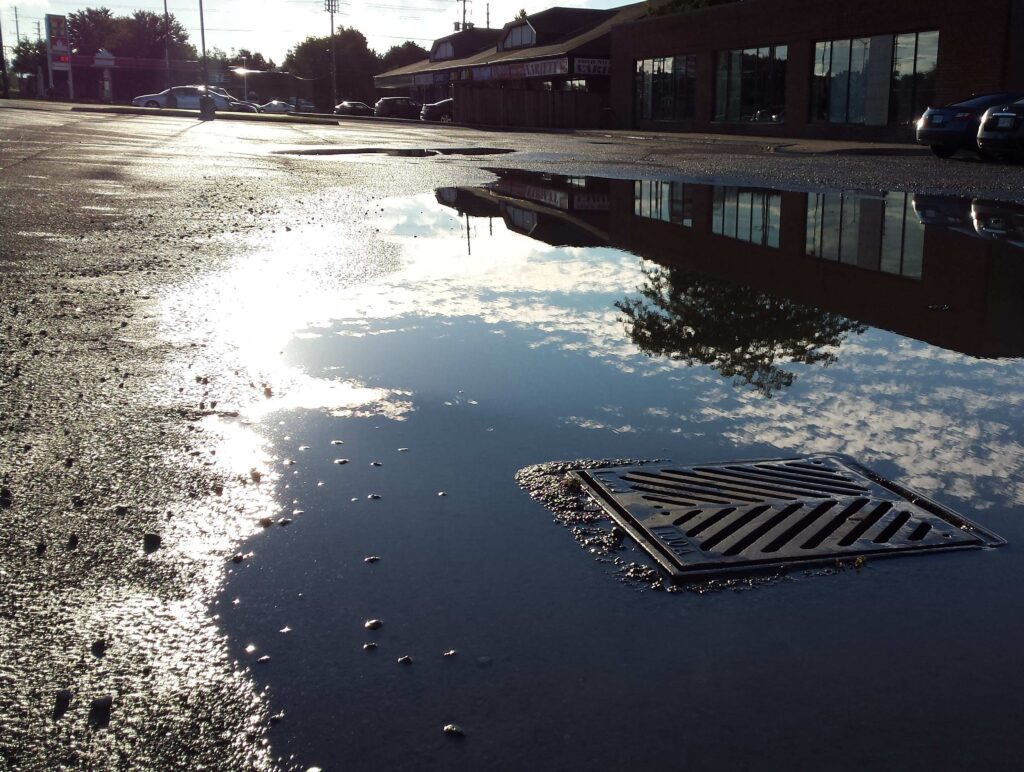
- Inspect all catch basins for damage, debris, and proper drainage function
- Assess line painting — faded markings create liability and confusion for drivers and pedestrians
- Check bollards and signage for winter damage or ones that might be missing.
Spring maintenance sets the condition of your lot for the entire active season. Properties that skip spring maintenance often find themselves dealing with accelerated deterioration by fall.
Summer: Monitor and Address Emerging Issues
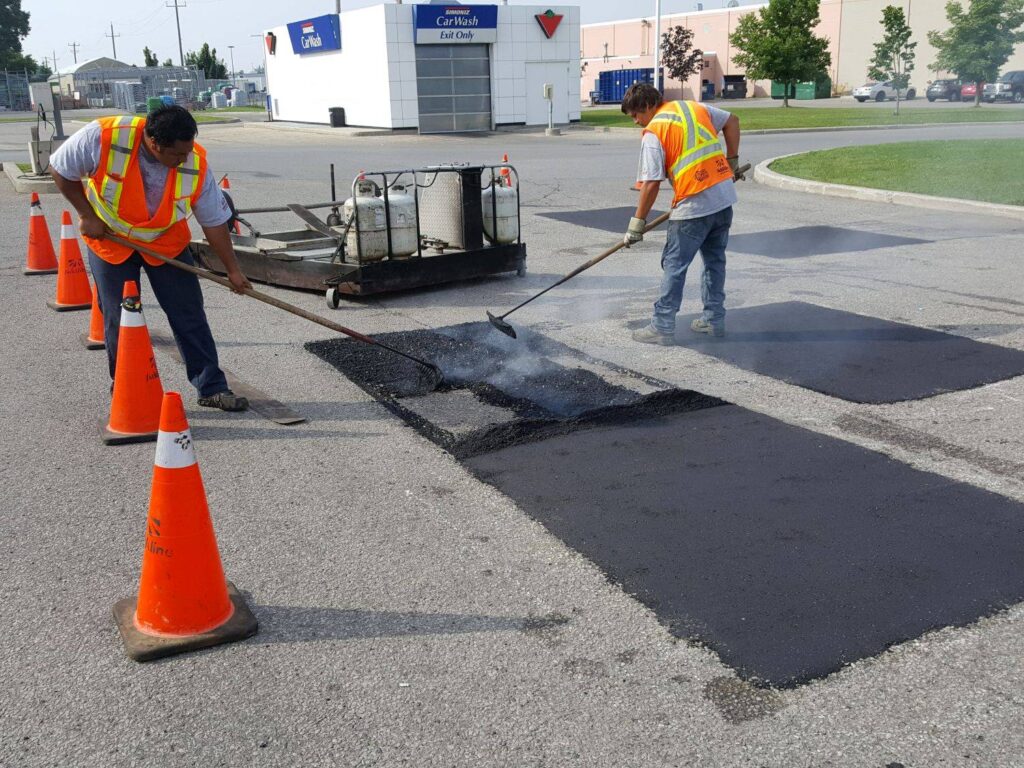
Summer is generally the best season for asphalt repair work — warm temperatures improve material performance and curing times. While your spring inspection should have caught the major issues, summer is the time to complete any scheduled repairs and monitor for new problems.
 What to do in summer:
- Complete any repairs identified in your spring inspection
- Watch for new cracking caused by UV degradation and heat expansion — asphalt softens in extreme heat and can develop surface cracking
- Monitor high-traffic areas and turning points, which experience the most stress
- Address any drainage issues before heavy summer rains create pooling and sub-base erosion
- Complete line painting if not done in spring — clear markings reduce liability and improve traffic flow
Fall: Prepare for Winter Before It Arrives
Fall is your second critical maintenance window. Any unaddressed cracks or damage heading into winter will absorb water, freeze, and expand — causing damage that is always more expensive to repair than it would have been in the fall.
What to do in fall:
- Conduct a second full inspection before ground temperatures drop below 5°C
- Fill any remaining cracks identified since spring — hot rubber crack fill can be applied in cooler temperatures and is specifically designed to flex through freeze-thaw cycles
- Clear all catch basins of debris to ensure proper drainage before freeze-up
- Assess and repair any areas where water pools — standing water that freezes causes significant structural damage
- Review your winter maintenance plan with your snow-clearing contractor to help minimize asphalt damage caused by plowing. Before snow-clearing operations begin, document the existing condition of your parking lot with clear photos. This provides a record of the pavement’s condition before winter maintenance begins and may help support a warranty or damage claim if plowing causes damage. Document the condition before the season starts—photos can make all the difference.
Winter: Protect What You Have
Active asphalt repair work is generally not possible in winter — cold temperatures prevent proper material adhesion. Winter maintenance focuses on protection and documentation rather than repair. Some winter repairs can be done but, typically, they are more temporary and more expensive than summer repairs.
 What to do in winter:
- Use calcium magnesium acetate or sand-based ice control products where possible — rock salt accelerates asphalt surface degradation over time
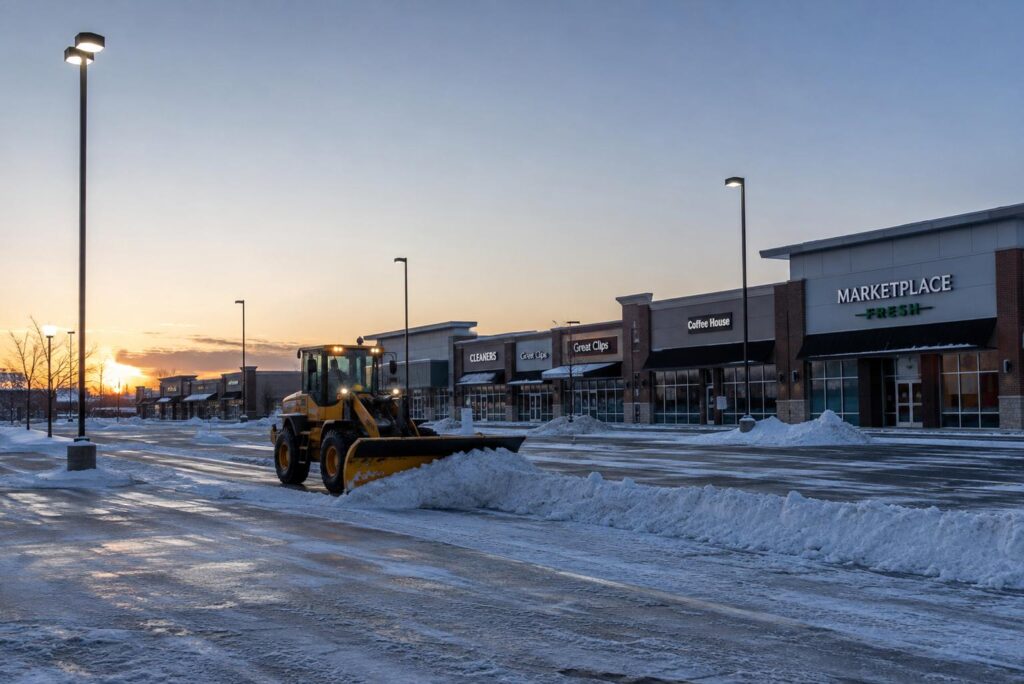
- Ensure snow clearing contractors use rubber-edged plows or maintain a safe blade height to avoid gouging the asphalt surface
- Document any new damage as it becomes visible so repairs can be prioritized in the spring
- Monitor catch basins during thaw periods to ensure they are draining freely
How Traffic Volume Affects Maintenance Frequency
Not all parking lots need the same level of attention. Traffic volume, vehicle weight, and how the lot is used all influence how quickly your pavement deteriorates and how frequently maintenance is required.
High-Traffic Commercial Lots (Retail, Grocery, Medical, Industrial)
Lots that see heavy daily traffic — including delivery vehicles, large trucks, or frequent turning movements — experience accelerated wear. These properties typically benefit from annual inspections and maintenance, with crack filling and patching addressed each spring and fall.
Medium-Traffic Lots (Office Buildings, Light Commercial, Mid-Size Retail)
Medium-traffic properties can often maintain good pavement condition with a thorough spring inspection and maintenance program, supplemented by a lighter fall inspection. Annual crack filling in spring is still recommended, with patching scheduled as needed.
Lower-Traffic Lots (Residential Condominiums, Low-Use Commercial)
Lower-traffic lots still require regular inspection — freeze-thaw damage is unrelated to traffic volume. However, the volume of active repair work needed may be lower, and in some cases a comprehensive maintenance visit every one to two years may suffice, provided inspections are conducted annually to catch emerging issues early.
The Real Cost of Delaying Maintenance
The most common mistake commercial property managers make is waiting for damage to become visually significant before acting. By the time a crack has widened to the point of being obviously problematic, water has already been penetrating the sub-base for months or years. What started as a $200 crack fill job may now require a $2,000 infrared repair — or worse, a full section repave. Our article on parking lot liability in Ontario covers the legal risks of deferred maintenance in detail.
Industry data consistently shows that proactive maintenance extends pavement life by 40 to 60 percent compared to reactive maintenance. For a commercial parking lot, that difference can be measured in decades — and hundreds of thousands of dollars in deferred repaving costs.
The hierarchy of asphalt maintenance costs, from least to most expensive, is straightforward: crack filling costs a fraction of patching, which costs a fraction of resurfacing, which costs a fraction of full repaving. Every stage of neglect moves you further up that cost ladder.
Building a Proactive Maintenance Program
The most effective approach to commercial parking lot maintenance isn’t reactive — it’s planned. A proactive maintenance program sets an annual inspection and service schedule, budgets for predictable maintenance costs, and eliminates the expensive surprises that come from deferred repair.
A well-structured program typically includes:
- Annual spring inspection and maintenance visit
- Annual fall inspection with crack filling and drainage clearance
- Infrared asphalt repair for failed or settled areas as identified
- Catch basin inspection and restoration as needed
- Line painting on a cycle appropriate to traffic volume and fading rate
- Bollard and signage review annually
Working with a single trusted maintenance partner who knows your properties make this significantly easier. Addaline’s proactive maintenance approach means we track the condition of your lots over time, flag emerging issues before they escalate, and help you plan and budget accurately year over year. Learn more about our full range of asphalt maintenance services.
Why Property Managers Across Ontario Trust Addaline
Addaline Asphalt Maintenance has been serving commercial property managers, condominium corporations, and property owners across Ontario for over two decades. We’re not a paving company that does maintenance on the side — asphalt maintenance and repair is everything we do, and we’ve built our entire operation around doing it better than anyone else. Here’s what that means in practice:
Advanced Infrared Technology
Our infrared repair process heats and blends new asphalt seamlessly into existing surfaces — producing repairs that are traffic-ready in as little as 45 minutes. This isn’t just faster; it’s structurally superior to traditional cold-patch repairs and significantly more durable. Learn more about why Addaline’s approach delivers better results.
An Industry-Leading Two-Year Warranty
Every repair Addaline completes is backed by a two-year warranty — one of the strongest in the industry. We stand behind our work because we do it right the first time, with the right materials, the right equipment, and crews who are trained specifically in asphalt maintenance.
Proactive, Not Reactive
Addaline’s maintenance philosophy is built around getting ahead of problems — not responding to them. We help property managers develop maintenance schedules that are tied to the actual condition of their properties, not arbitrary timelines. That means smarter spending, fewer surprises, and lots that last longer.
Clear Communication and Reliable Service
We coordinate around your operations, communicate clearly before and during every job, and show up when we say we will. Our clients — many of whom have worked with us for 10, 15, even 20 years — will tell you that the relationship is as important as the repair.
Environmental Responsibility
Addaline uses clean-burning propane equipment and battery-powered tools to reduce emissions, and our infrared repair process minimizes material waste by recycling and reusing existing asphalt wherever possible. Maintaining your pavement proactively is also inherently more sustainable than full repaving — which generates significant material waste.

Robin Farley is the VP of Marketing and Sales at Addaline Asphalt Maintenance, where she has been helping educate commercial property owners and facility managers since 2012. With a background in journalism, communications, and fundraising, Robin specializes in simplifying complex parking lot maintenance topics into practical, informative resources. She developed Addaline’s Asphalt 101 educational program and regularly writes about asphalt repairs, pavement maintenance, and long-term asset management for commercial properties.
