

The Law That Governs You: Ontario’s Occupiers’ Liability Act
Most Ontario property owners don’t know the name of the law they’re governed by — but they feel its consequences when a slip-and-fall claim lands in their inbox.
Ontario’s Occupiers’ Liability Act, R.S.O. 1990, places a legal duty of care on anyone who occupies or controls a premises. That includes commercial property owners, landlords, property managers, and condominium corporations.
Under this legislation, occupiers must take reasonable steps to ensure that people entering the property are reasonably safe. “Reasonably safe” is not a fixed standard — courts evaluate it based on what a reasonable person would have done given the known risks.
For parking lots, that means:
- Identifying and repairing hazards such as potholes, cracks, and uneven surfaces
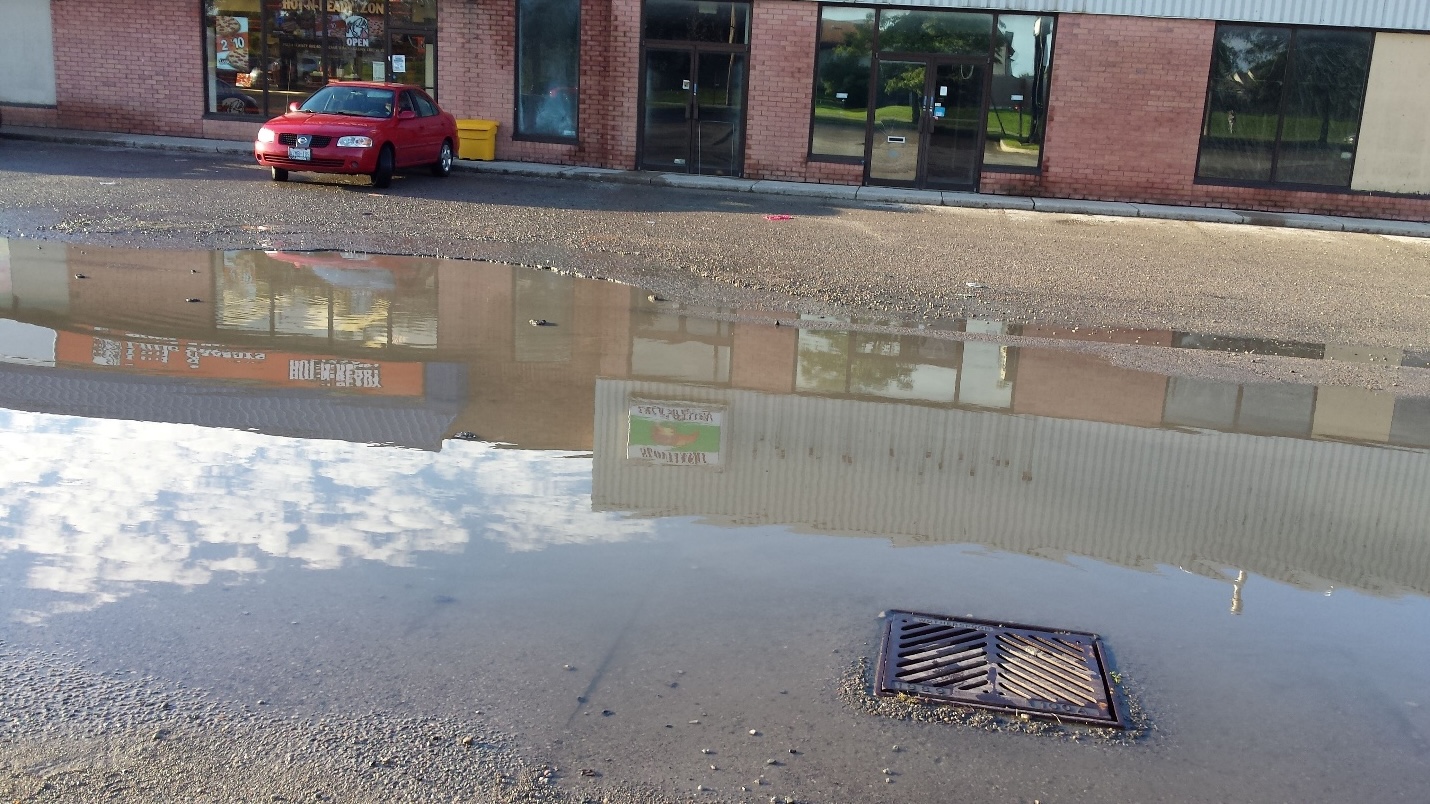
- Maintaining proper drainage to prevent pooling water and ice formation
- Keeping line markings visible and accessible paths clearly defined
- Responding promptly when hazards are reported or observed
- Keeping a documented record of inspections and maintenance work
Importantly, the Act applies to all visitors — customers, tenants, contractors, and members of the public — not just people you’ve invited onto the property.
Can a Pothole or Crack Lead to a Lawsuit?
Yes — and it happens more often than most property owners expect.
In Ontario, personal injury claims arising from parking lot incidents are among the most common premises liability cases. A person who trips on an unrepaired crack, twists an ankle in a pothole, or falls on a surface damaged by freeze-thaw cycles may have grounds to sue if they can show:
- The hazard existed — the crack, pothole, or surface failure was present
- You knew or should have known — you were aware of the hazard, or a reasonable inspection would have caught it
- You failed to act — no repair was made, no warning was posted, no interim measure was taken
- They suffered harm — there was a documented injury as a direct result
Courts don’t expect perfection. A freshly formed pothole reported yesterday is different from a crater that’s been growing for three seasons. What courts look at is whether you acted reasonably — whether you had a system for identifying hazards and whether you followed through.
The absence of a maintenance record is often more damaging than the hazard itself. If you can’t demonstrate that you inspect your property and respond to defects, it becomes very difficult to argue that you met your duty of care.
Ontario’s Freeze-Thaw Cycle: Why Parking Lots Deteriorate Faster Here
Ontario’s climate is particularly hard on asphalt. The freeze-thaw cycle — water infiltrating the pavement, freezing, expanding, and thawing — puts enormous stress on any paved surface. Over time, minor surface cracks become structural failures.
The progression typically looks like this:
- Small surface cracks form, often from traffic stress or UV oxidation
- Water enters the cracks and reaches the sub-base
- Freezing causes the water to expand, widening and deepening the crack
- Spring thaw leaves behind a softened, weakened sub-base
- Traffic load accelerates the failure — alligator cracking, depressions, and potholes follow
This cycle repeats every year, and every year of deferred maintenance accelerates the damage. A $400 crack repair today is not the same investment as a $400 crack repair in three years — by then, you may be looking at a section replacement or, eventually, full repaving.
The practical takeaway: in Ontario, regular inspection and early intervention are not optional. The climate makes deterioration a certainty. The only variable is how fast you respond to it.
Who Is Responsible When There Are Multiple Parties?
Ownership and management responsibility aren’t always held by the same party. In commercial real estate, the picture is often more complicated:
Property Managers
If you manage a property on behalf of an owner, your management agreement likely includes maintenance obligations. Whether liability falls on you, the owner, or both depends on the specific terms of your agreement and the nature of the hazard. Either way, the duty of care under the Occupiers’ Liability Act is attached to whoever controls the premises.
Condominium Corporations
In a condominium, the corporation is typically responsible for common elements — including parking lots. The board and property manager have a collective responsibility to maintain safe conditions. Deferred maintenance decisions made at the board level can have significant legal consequences.
Commercial Tenants
Where a commercial tenant has exclusive use of a parking lot or has taken on maintenance responsibilities by contract, liability may shift in their direction. Again, the specifics depend on the lease. But in most cases, ultimate responsibility for the physical condition of the lot remains with the property owner.
When in doubt, consult legal counsel about how your specific ownership or management structure affects your liability exposure. What’s clear is that someone is responsible, and leaving the lot in disrepair is not a defensible position regardless of who that is.
What Maintenance Actually Reduces Your Liability?
There is no single action that eliminates liability — but a documented, consistent maintenance program is the strongest protection available to a property owner. Here’s what that looks like in practice:
 Crack Filling
 Crack Filling
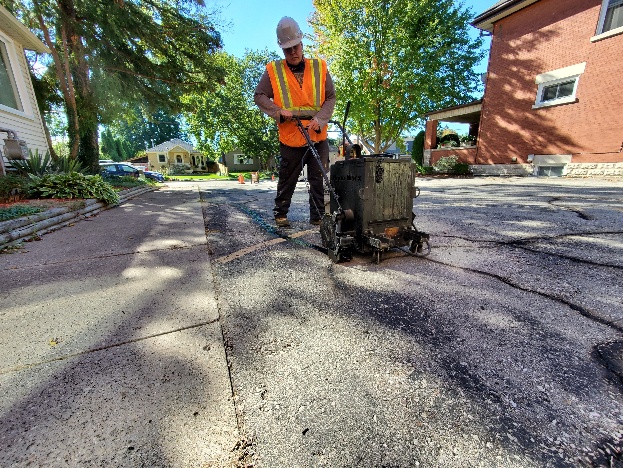
Surface cracks are the first entry point for water and the beginning of every pothole. Hot rubber crack filling seals cracks before water can infiltrate the sub-base — stopping the freeze-thaw cycle before it starts. This is one of the most cost-effective maintenance investments a property owner can make, and it’s one of the most compelling pieces of evidence that you’ve been proactive about your lot’s condition.
Asphalt Repairs — Targeted, Not Total
Full repaving is expensive, disruptive, and often unnecessary. The majority of commercial parking lots don’t need to be completely redone — they need specific problem areas addressed before they spread.
Think of it this way: a repave is buying a new car. Targeted asphalt repair is maintaining the one you have so it gets you where you need to go — reliably, for years more than it otherwise would. Most property owners are surprised to learn how much service life they can add to a deteriorating lot through well-timed spot repairs.
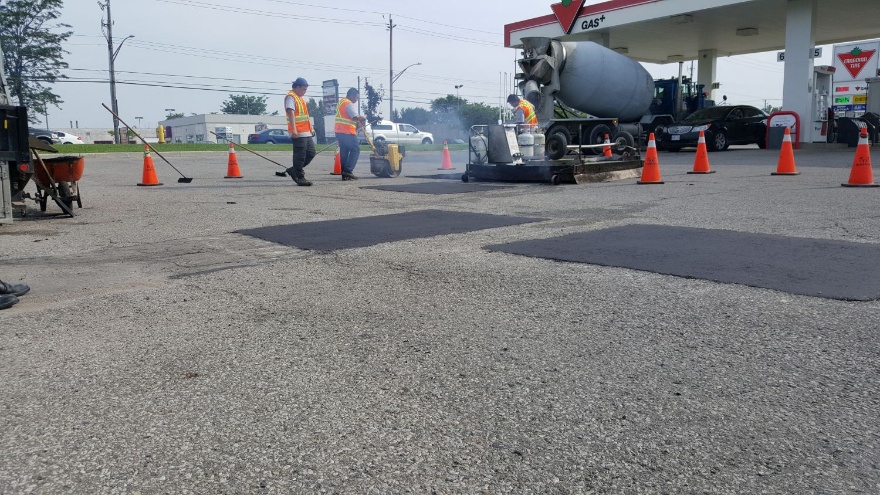
Addaline uses infrared asphalt repair technology, which recycles the existing material, produces seamless results, and can be completed in approximately 45 minutes — with the surface ready for traffic the same day.
 Catch Basin Maintenance
 Catch Basin Maintenance
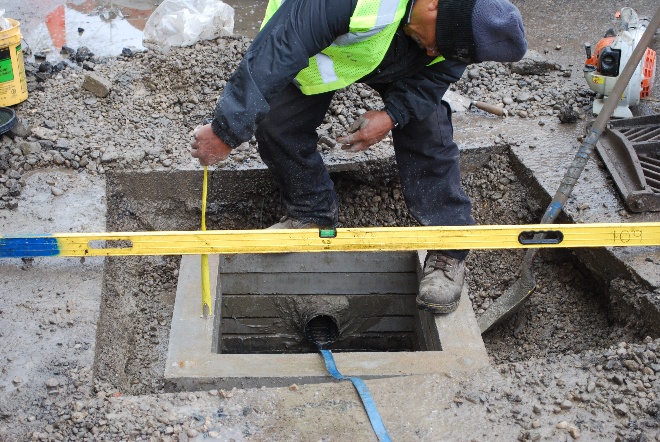
Poor drainage is one of the most overlooked sources of asphalt damage. When water can’t drain properly, it pools, penetrates, and weakens the sub-base. It also freezes — creating ice patches that are both a liability hazard and a structural problem.
Regular catch basin inspection and restoration keeps drainage functioning as designed. Addaline’s Catch Basins & Concrete 101 webinar is a useful resource for property managers who want to understand how these systems work and what to watch for.
Line Painting
Faded or missing line markings contribute to accidents and can also support a negligence finding if someone is injured in an area with unclear traffic flow or no marked accessible path. Parking lot line painting is a relatively low-cost service that has an outsized impact on safety and compliance.
Concrete Repairs
Sidewalks, curbs, and traffic islands that are cracked, heaved, or uneven present a direct trip hazard — and concrete failures are particularly common after harsh winters. Concrete repair work addresses these hazards before they produce a claim.
The Documentation Piece: Why Records Matter as Much as Repairs
Doing the maintenance is essential. Proving you did it is equally important.
In a liability claim, the property owner who can produce:
- Dated inspection logs
- Before-and-after photographs of repairs
- Contractor invoices and work orders
- Maintenance schedules and correspondence
…is in a far stronger legal position than one who says “we take care of things as they come up” but can’t demonstrate it.
Addaline provides before-and-after photos with every job — a practice that builds exactly this kind of documentation trail. Over time, a property with a clear repair history tells a story of responsible ownership. That story matters if a claim is ever made.
For guidance on building a proactive maintenance schedule, Ontario’s Ministry of Municipal Affairs and Housing offers resources on property standards applicable to commercial and residential property owners.
When Is the Right Time to Call a Contractor?
 The most honest answer: before the problem is obvious to your tenants and visitors.
By the time a pothole is visible from across the parking lot, it has almost certainly been developing for months — and the surrounding asphalt may be compromised beyond what surface repair can address. Early intervention keeps repair costs lower, keeps the hazard from reaching a level that causes injury, and keeps the lot in service without major disruption.
A reasonable approach for most commercial properties:
- Spring: Assess winter damage — cracks, frost heaves, catch basin conditions
- Summer: Complete repairs while paving season is in full swing
- Fall: Crack filling before temperatures drop and freeze-thaw cycles begin
- After major weather events: Inspect for new damage
For property managers handling multiple sites, Addaline’s portfolio-wide service approach allows for centralized reporting and scheduled maintenance across locations — which is particularly useful when you need to demonstrate consistent care standards across an entire property portfolio.

Robin Farley is the VP of Marketing and Sales at Addaline Asphalt Maintenance, where she has been helping educate commercial property owners and facility managers since 2012. With a background in journalism, communications, and fundraising, Robin specializes in simplifying complex parking lot maintenance topics into practical, informative resources. She developed Addaline’s Asphalt 101 educational program and regularly writes about asphalt repairs, pavement maintenance, and long-term asset management for commercial properties.
